
Why Skate Style Is More Than Just Clothes | The Culture Behind the Look
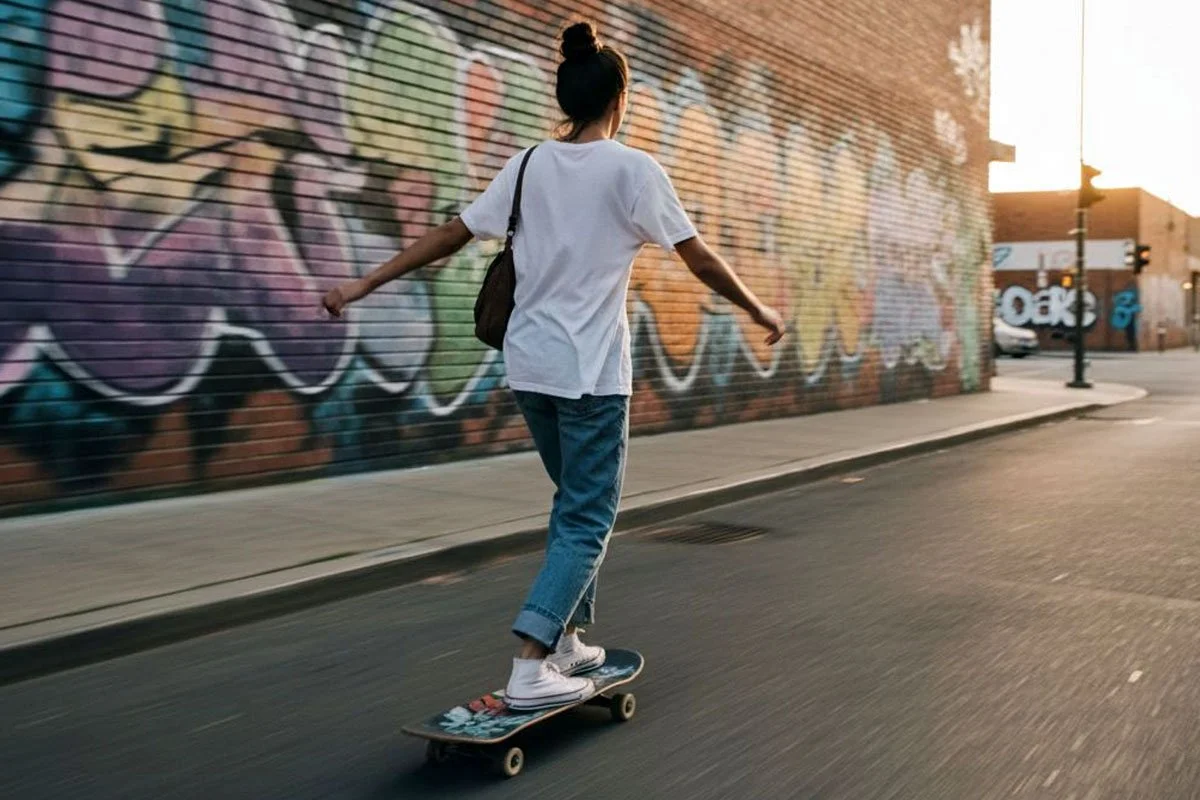
Does the term “Skate Style” Make You Cringe? Here’s why it might.
What is “skate style.”
It can be a little off-putting to hear that term thrown around, because pretty much no skater would ever say that. And that’s because skate style was never designed to be style.
It was comfort, and maybe a little bit survival. But it sure wasn’t style.
Listen to this Story on the 1923 Main Street Podcast
Function Before Fashion
In the early days of modern skateboarding — particularly during the rise of street skating in the 1980s and 1990s — whatever you chose to wear as clothing had one job (well, maybe two): move well and survive impact.
Loose silhouettes weren’t trends. They allowed:
Full range of motion
Protection during falls
Durability against things like grip tape rub and
Allowing for airflow on hot days
Skaters wore what worked. And what worked looked different from everything else.
That difference (as often happens) became identity.
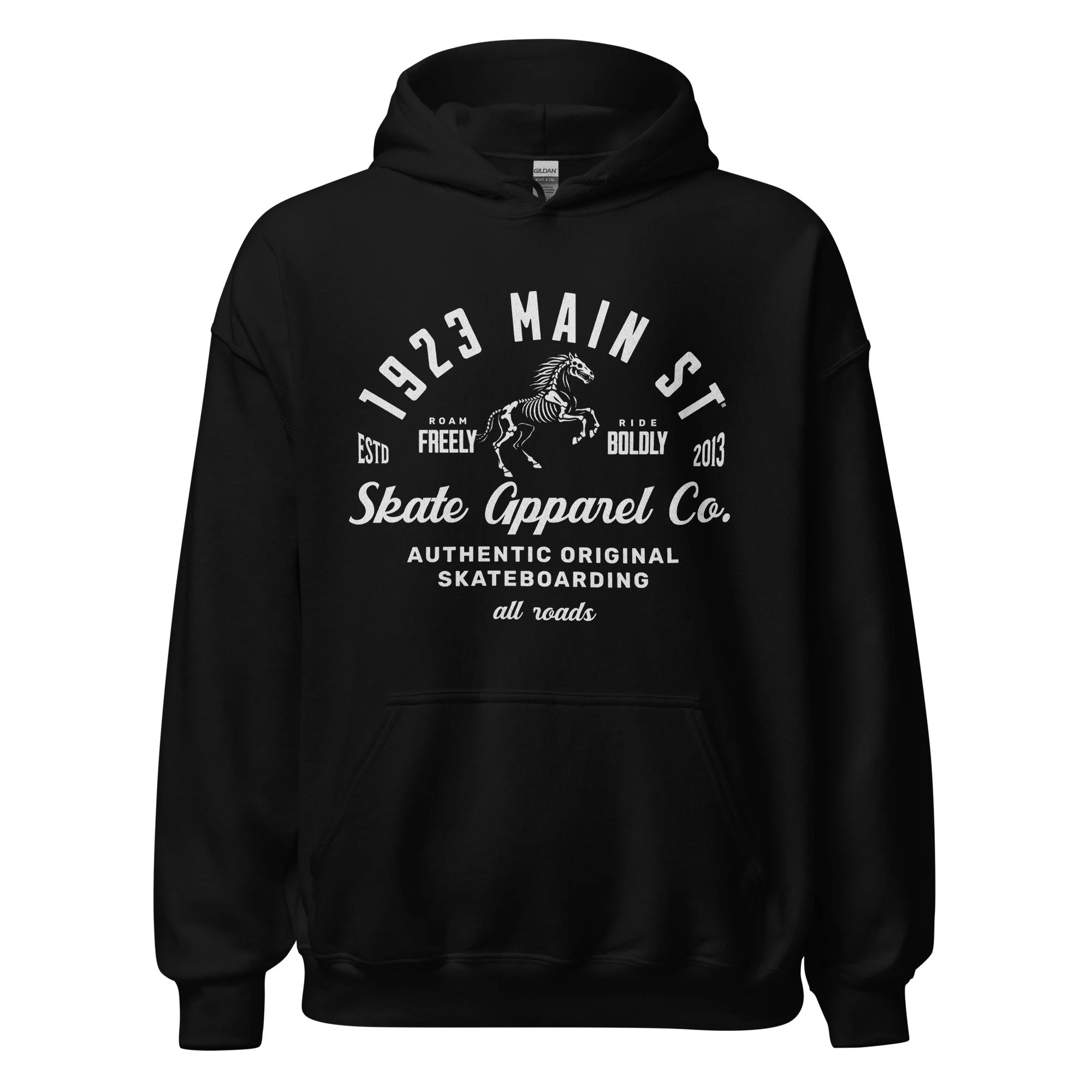
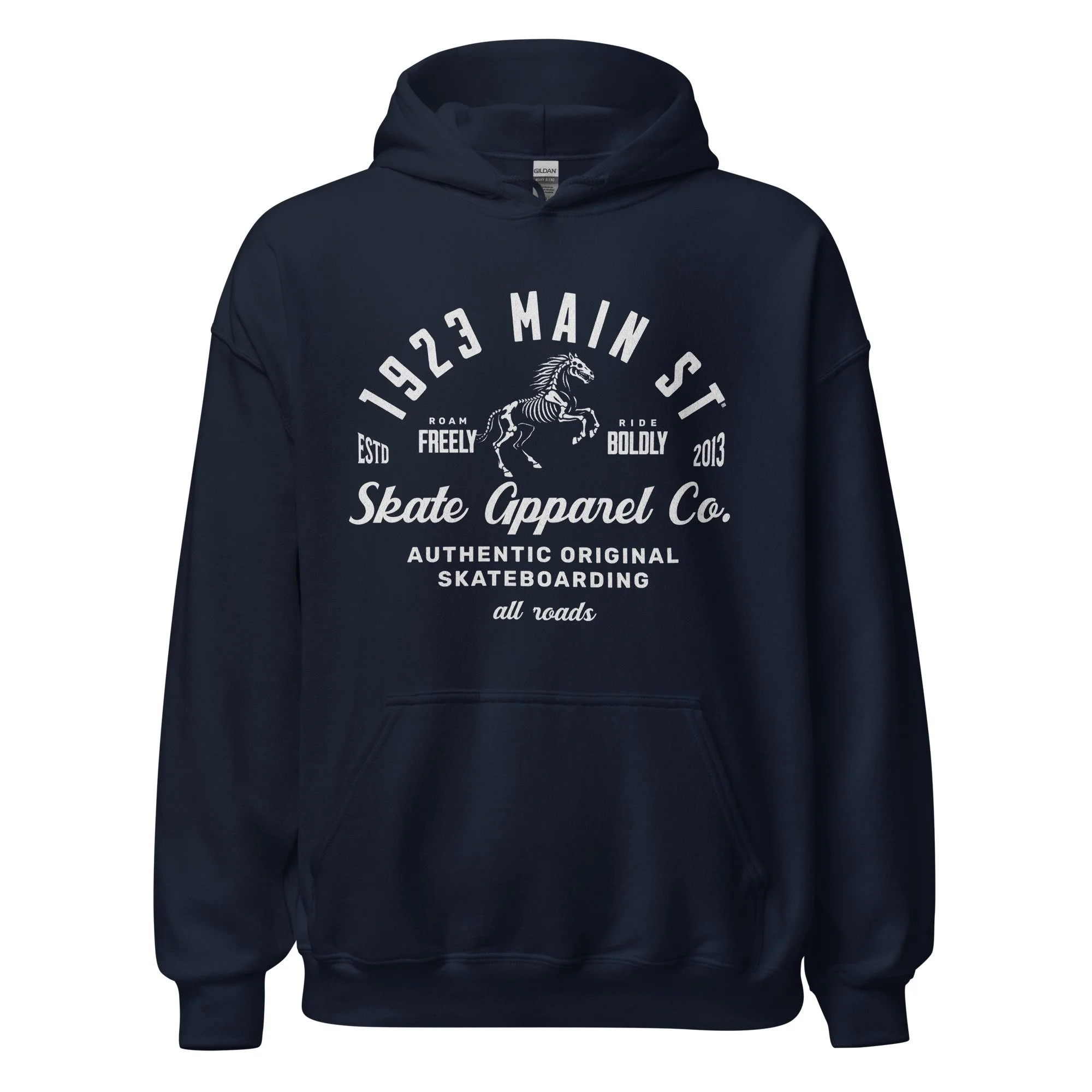
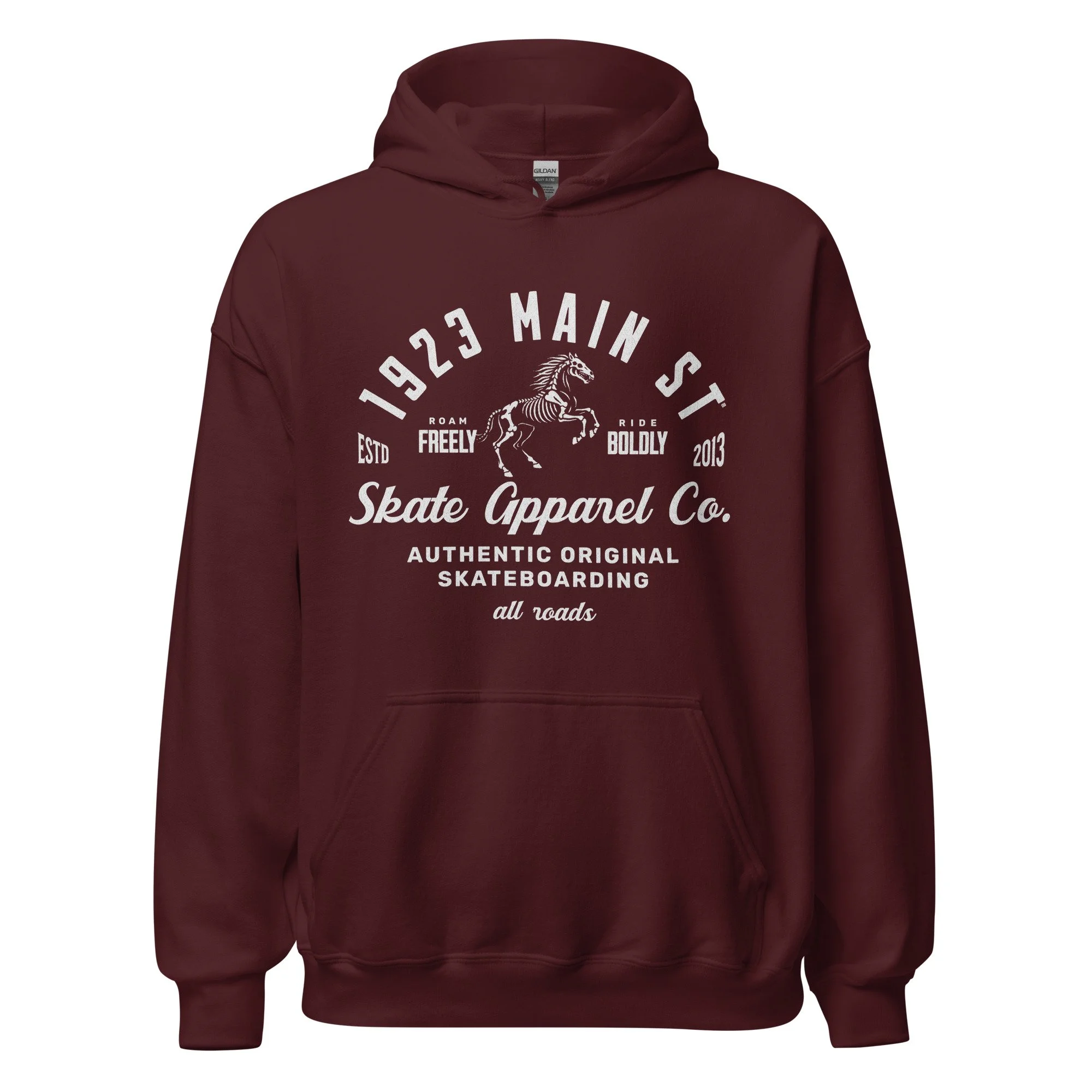
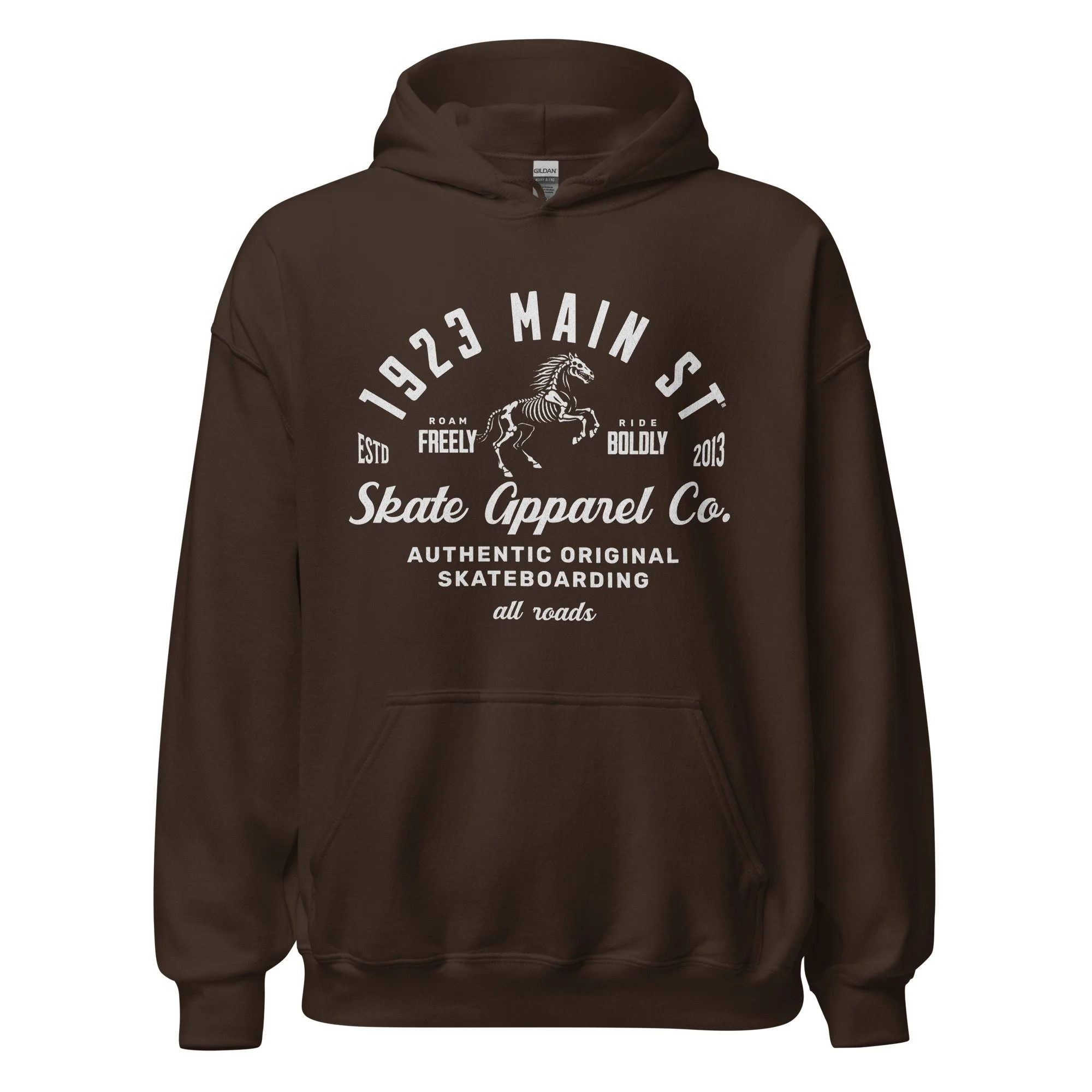
Built for cool nights and late skate sessions.
The Night Rider Skate Apparel Co. hoodie by 1923 Main Street® features our iconic Bones Mane (our trusty brand mascot) and is a warm, durable skateboarding hoodie designed for night riders (and cool days).
Made for comfort, layering and all-season wear, this skateboarding hoodie offers a relaxed fit and a classic silhouette that holds up whether you are pushing through city streets or cooling down after a long session. Available in black, navy, maroon and dark chocolate, it is the perfect skate hoodie for riders who prefer the quiet, freedom and focus of skating after dark.
Also available as a t-shirt.
• Base Item: Gildan 18500 • 50% pre-shrunk cotton, 50% polyester • Fabric weight: 8.0 oz/yd² (271.25 g/m²) • Air-jet spun yarn with a soft feel and reduced pilling • Double-lined hood with matching drawcord • Quarter-turned body to avoid crease down the middle • 1 × 1 athletic rib-knit cuffs and waistband with spandex • Front pouch pocket • Double-needle stitched collar, shoulders, armholes, cuffs, and hem • Blank product sourced from Bangladesh, Nicaragua, Honduras or El Salvador
Disclaimer: Due to the fabric properties, the White color variant may appear off-white rather than bright white.
This product is made especially for you as soon as you place an order, which is why it may take us a bit longer to deliver it to you. Making products on demand instead of in bulk helps reduce overproduction, so thank you for making thoughtful purchasing decisions.
Please note: since all orders are custom created, all sales are final and we do not accept returns, refunds or exchanges. Please check sizing carefully using the guide.
Anti-Fashion Became the Blueprint
One of the most interesting cultural twists in history is this:
The more skateboarding rejected mainstream fashion, the more mainstream fashion wanted it.
Publications like Thrasher were never meant to be luxury inspiration. They documented a subculture built on grit, concrete, and independence. Yet decades later, high-fashion houses began borrowing the exact silhouettes skateboarding popularized.
Baggy denim. Heavyweight hoodies. Bold graphics. Logo-forward tees.
What began as anti-fashion became a blueprint.
But here is what never changed:
Authenticity still matters.
The Graphic Tee as Identity
In skateboarding, a graphic isn’t decoration.
If anything, it’s maybe more of an affiliation. Sometimes it’s humor. Sometimes rebellion. And sometimes even art.
Deck graphics evolved into shirt graphics. Local crews screen-printed their own designs. Brands told stories through bold iconography.
When someone wears a skate-inspired graphic tee, they aren’t just wearing cotton.
They’re signaling something.
At 1923 Main Street®, that philosophy shapes everything. Graphics are not filler — they represent mindset, independence, and creative energy. They are designed to feel lived-in, not manufactured for trend cycles.
Why Fit Still Matters
Skateboarding is physical. Even if you aren’t out there every day anymore, your clothing still carries that heritage. And that’s because it feels right to you.
Oversized hoodies became staples because:
They absorb impact.
They layer easily.
They create silhouette confidence.
They move with the body.
A properly cut tee matters. Sleeve length matters. Fabric weight matters.
Skate style looks effortless — but it’s built on intention.
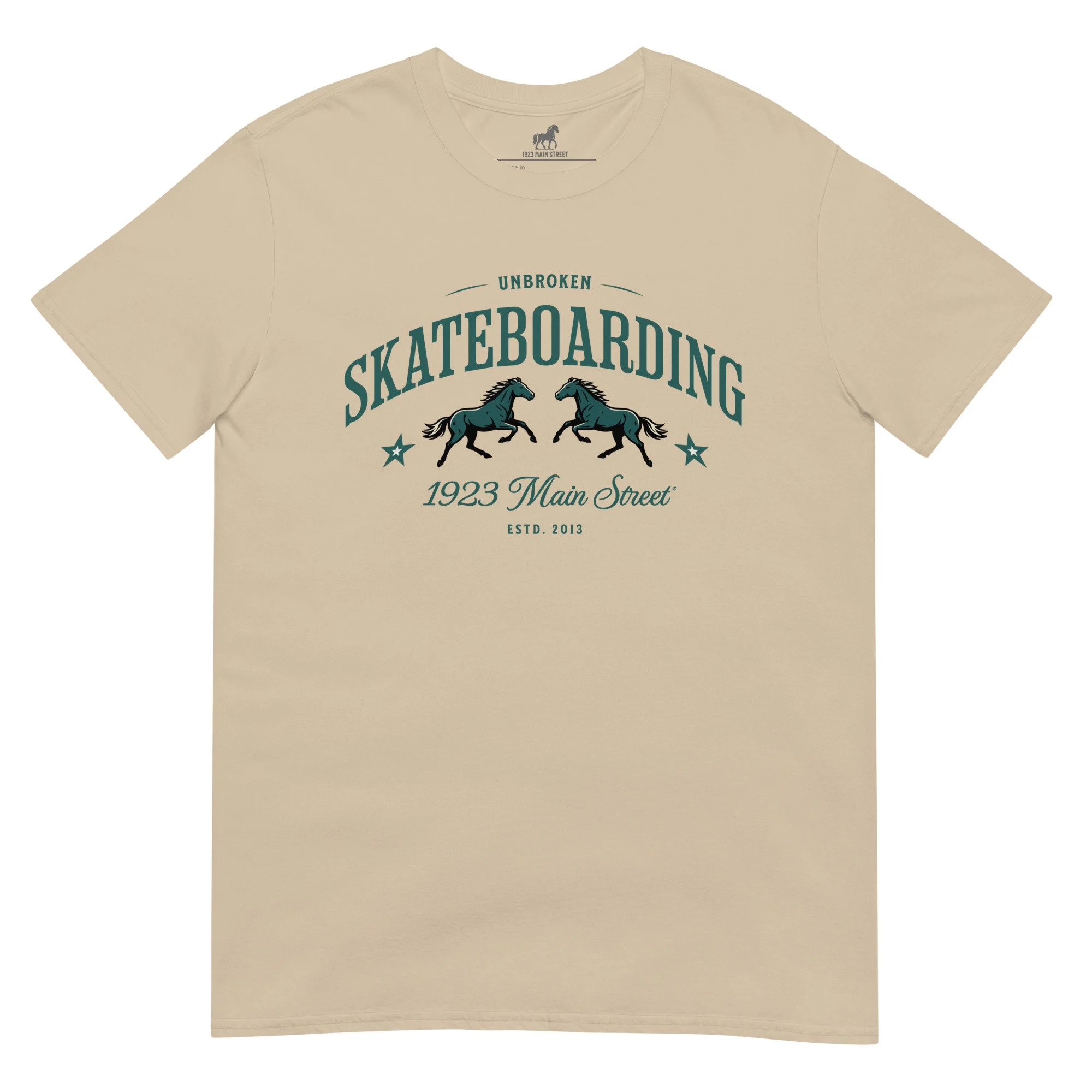
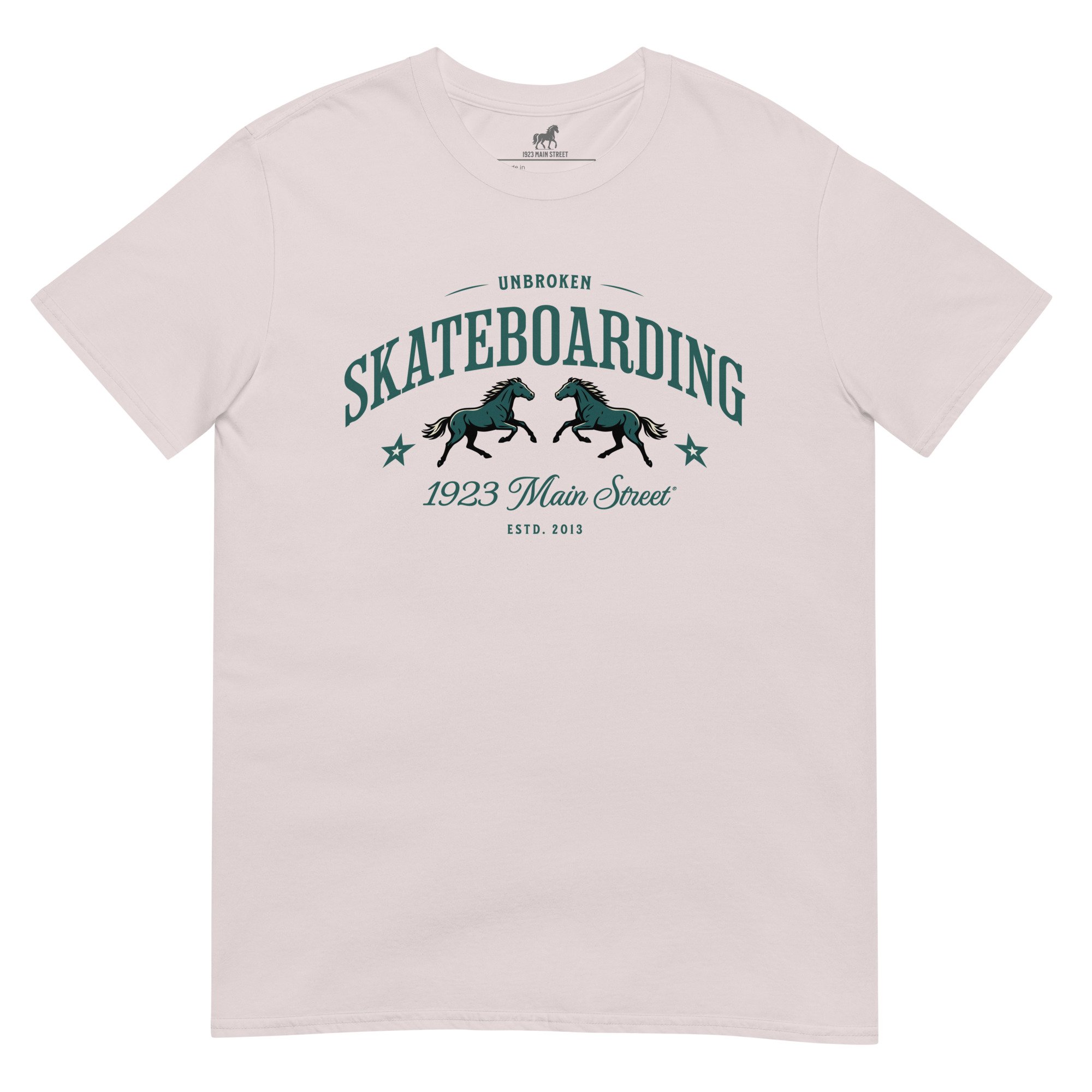
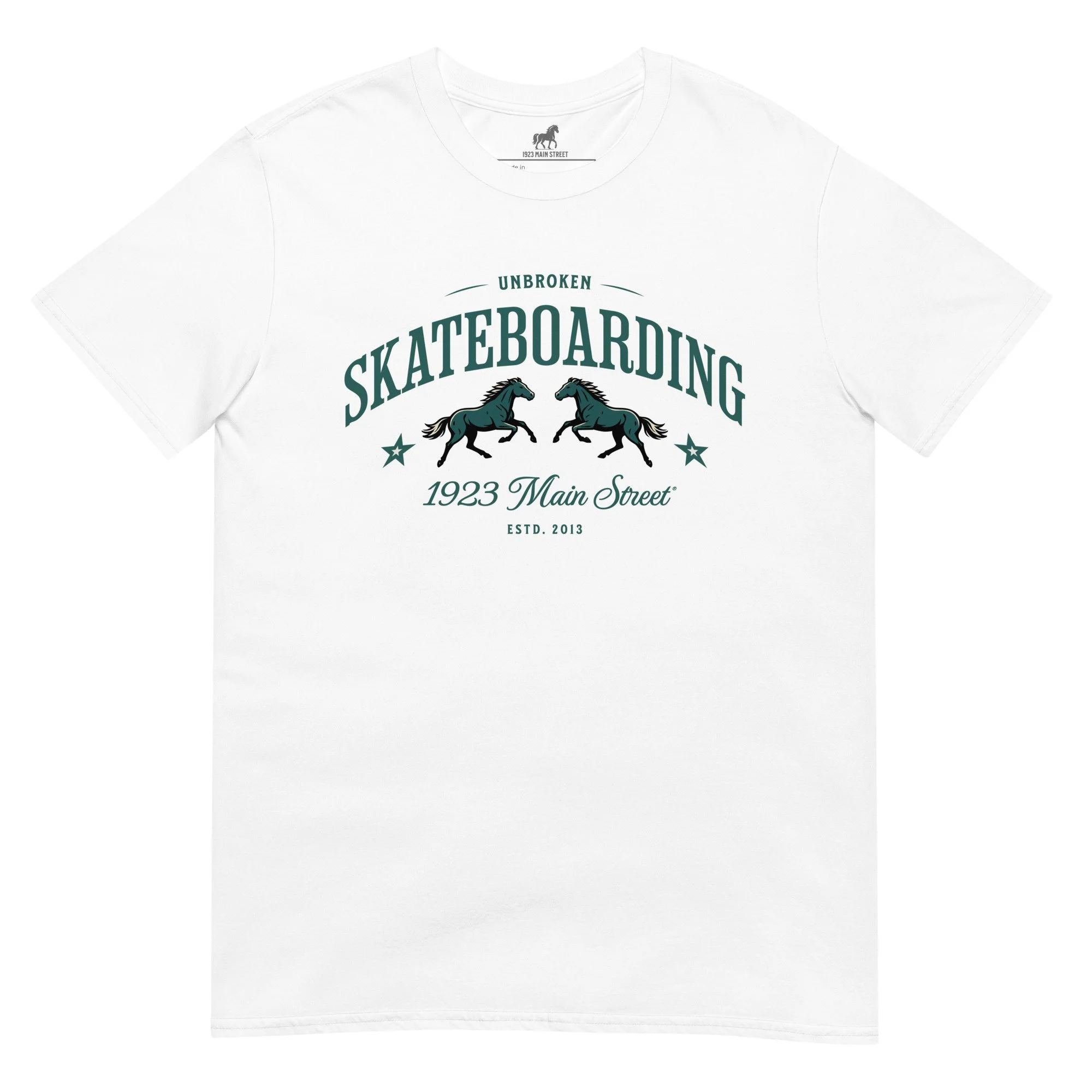
Balance Earned. Lines Held. Never Broken.
The Unbroken Skateboarding T-Shirt from 1923 Main Street® is built around the idea that real skating is about control and commitment. This trademark tee speaks to balance and power without saying too much.
Cut from soft, comfortable cotton with a lightweight fit, this skate tee is made for sessions, travel days, and whatever happens after. It’s clean, durable, and designed to wear well.
Also available as a skateboarding hoodie.
• Base Item: Gildan 64000 • 100% ring-spun cotton • 4.5 oz/yd² (153 g/m²) • Shoulder-to-shoulder taping • Quarter-turned to avoid crease down the center • Blank product sourced from Bangladesh, Nicaragua, Honduras, Dominican Republic, Haiti or Guatemala
Disclaimer: Due to the fabric properties, the White color variant may appear off-white rather than bright white.
This product is made especially for you as soon as you place an order, which is why it may take us a bit longer to deliver it to you. Making products on demand instead of in bulk helps reduce overproduction, so thank you for making thoughtful purchasing decisions.
Please note: since all orders are custom created, all sales are final and we do not accept returns, refunds or exchanges. Please check sizing carefully using the guide.
The Difference Between Skate-Inspired and Skate-Rooted
Today, skate aesthetics appear on luxury runways and global campaigns. Competitive platforms like Street League Skateboarding have professionalized the sport in ways that we honestly couldn’t have imagined in the 90s.
But still, thankfully, the heart of skate style remains local, DIY, and personal.
Real skate style isn’t about brand flexing. It’s about wearing pieces that feel like yours. If it resonates with you, that’s all that matters.
That is the difference.
And that is why skate style will never just be clothes.
It is culture you can wear.