
Layering for Cold Days: How You Can Stay Warm and Still Be Stylish
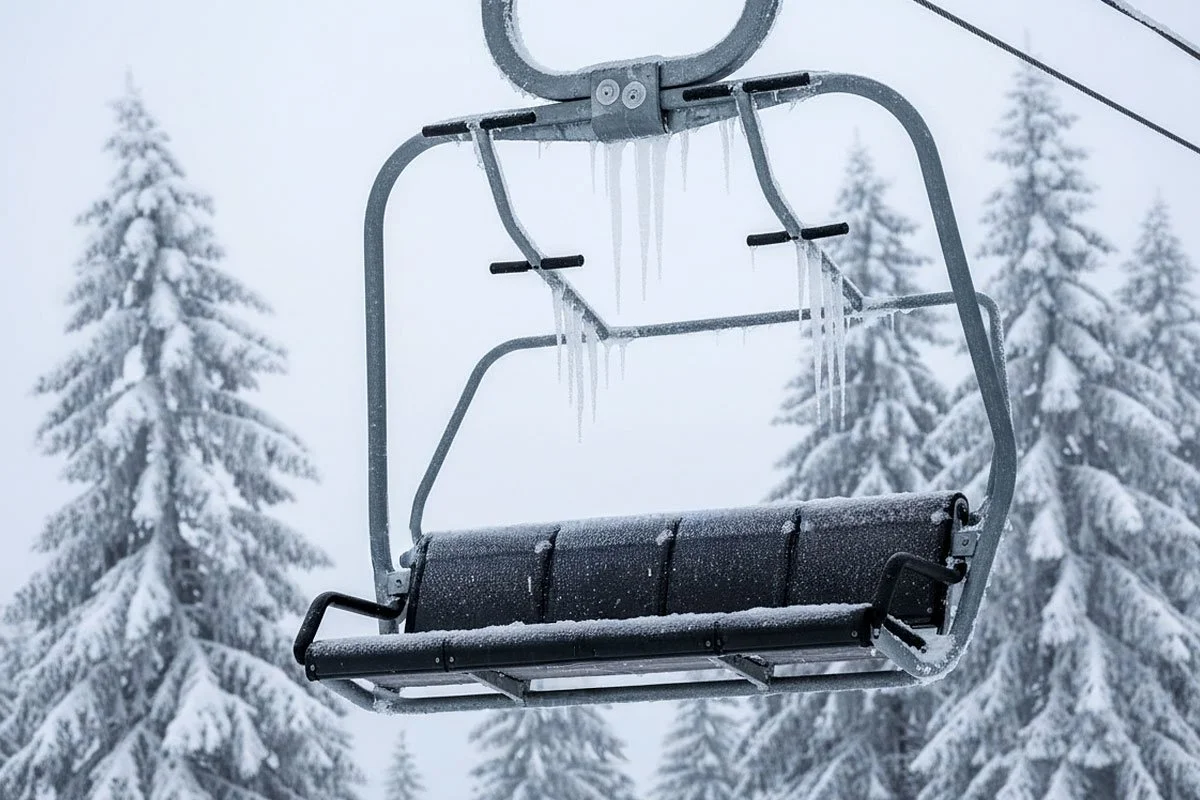
A Practical Guide for Snowboarders to Keep Warm in Extreme Cold Weather
When the temps drop on the mountain (especially for those painfully crisp early-morning runs) smart layering becomes the difference between a killer day and calling it quits before lunch.
But staying warm doesn’t have to mean bulking up like a balloon. With the right layering strategy, you can ride all day, stay comfortable, and still look your picture-perfect best from first chair to last.
Listen to this Story on the 1923 Main Street® Podcast
Here’s your 1923 Main Street® guide to layering for extreme cold without losing style points.
Why Layering Matters (Especially for Snowboarders)
Snowboarding is a full-body workout. You’re constantly in motion—bending, twisting, skating on flat roads and strapping in (or stepping in if you go that route). That means your outfit needs to keep you warm and give you the mobility to move freely. Proper layering traps heat, wicks moisture, blocks wind, and lets you adjust for changing conditions throughout the day.
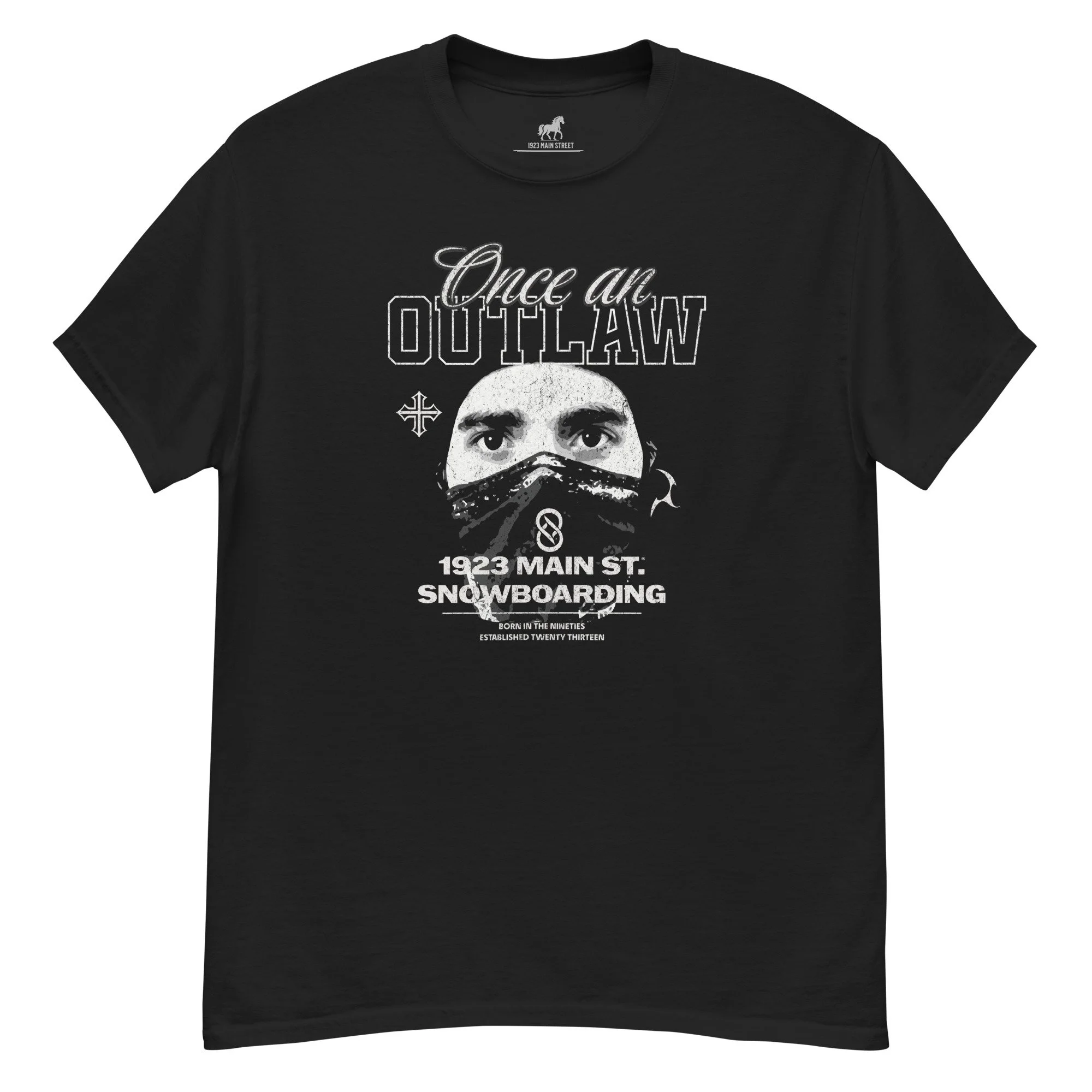
Born from the Outlaw Mindset
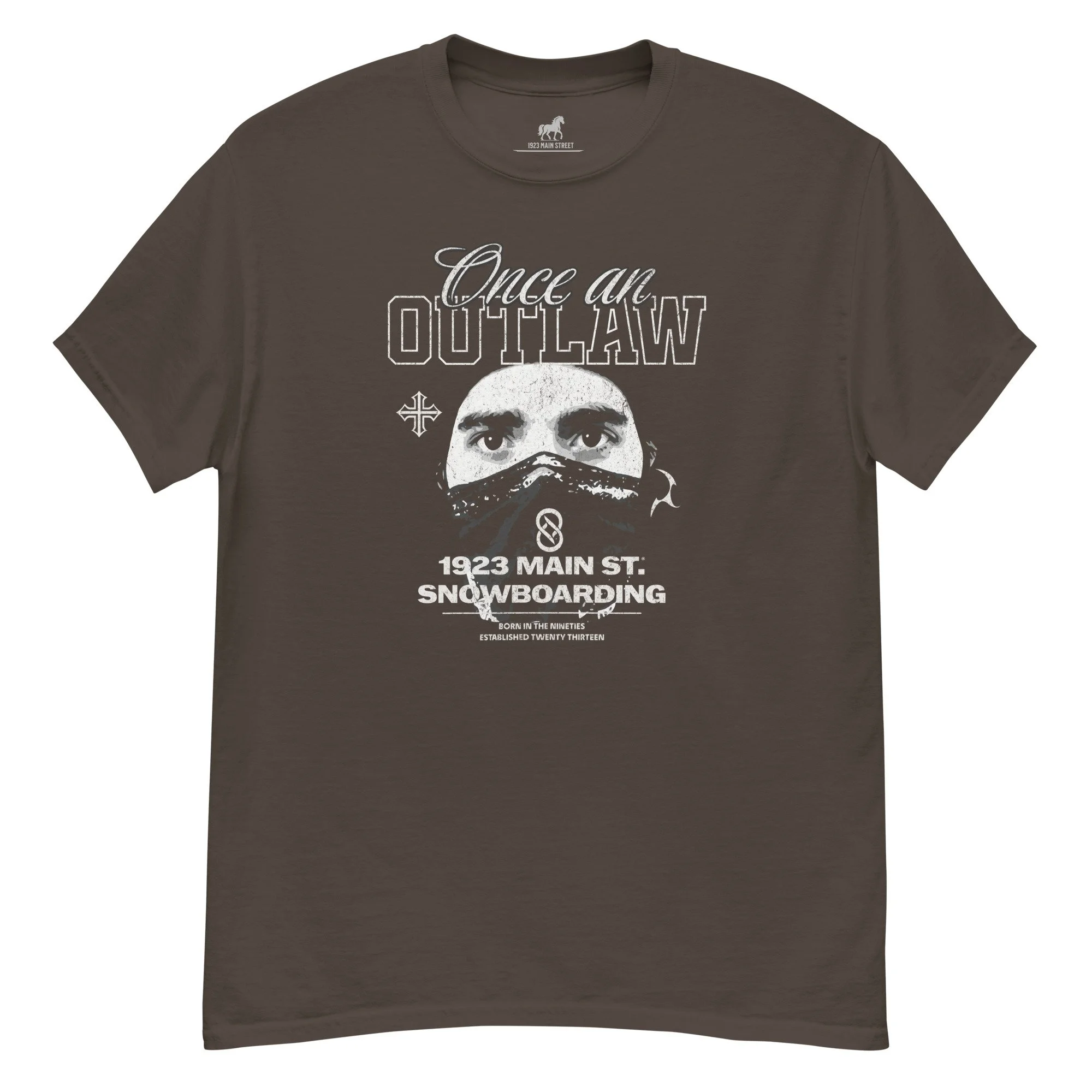
The Once an Outlaw, Mask men’s tee celebrates the era when snowboarders were pushed to the fringes—and chose to push back. Inspired by the rebellious roots of the sport, this shirt from the 1923 Main Street® Snowboarding Once an Outlaw collection honors the pioneers who chased lines where they weren’t wanted and built the foundation of modern riding.
Lightweight, easy to wear, and designed for all-season layering, it’s a nod to the riders who turned defiance into progression. Throw it on and own the legacy that started it all.
Also available as men’s snowboard hoodie.
• Base Item: Gildan 5000 • 100% cotton • Fabric weight: 5.0–5.3 oz/yd² (170-180 g/m²) • Open-end yarn • Tubular fabric • Taped neck and shoulders • Double seam at sleeves and bottom hem • Blank product sourced from Honduras, Nicaragua, Haiti, Dominican Republic, Bangladesh, Mexico
Disclaimers:
• Due to the fabric properties, the White color variant may appear off-white rather than bright white. • Dark color speckles throughout the fabric are expected for the color Natural.
This product is made especially for you as soon as you place an order, which is why it may take us a bit longer to deliver it to you. Making products on demand instead of in bulk helps reduce overproduction, so thank you for making thoughtful purchasing decisions.
Please note: since all orders are custom created, all sales are final and we do not accept returns, refunds or exchanges. Please check sizing carefully using the guide.
The Three-Layer System: Your Blueprint for Warmth on the Hill
1. Base Layer: Your Moisture Manager
This is the layer that sits against your skin and it’s the foundation of staying warm.
What to look for:
Synthetic fabric blends or even bamboo (but try to avoid 100% cotton)
Moisture-wicking to keep sweat off your skin
A slimmer fit is best for easy layering
And also, odor control fabric (or a least a sink rinse) is a bonus on multi-day trips
Pro snowboarder tip:
If the morning is brutally cold, double up: a thin synthetic base layer under a lightweight piece gives you warmth without bulk.
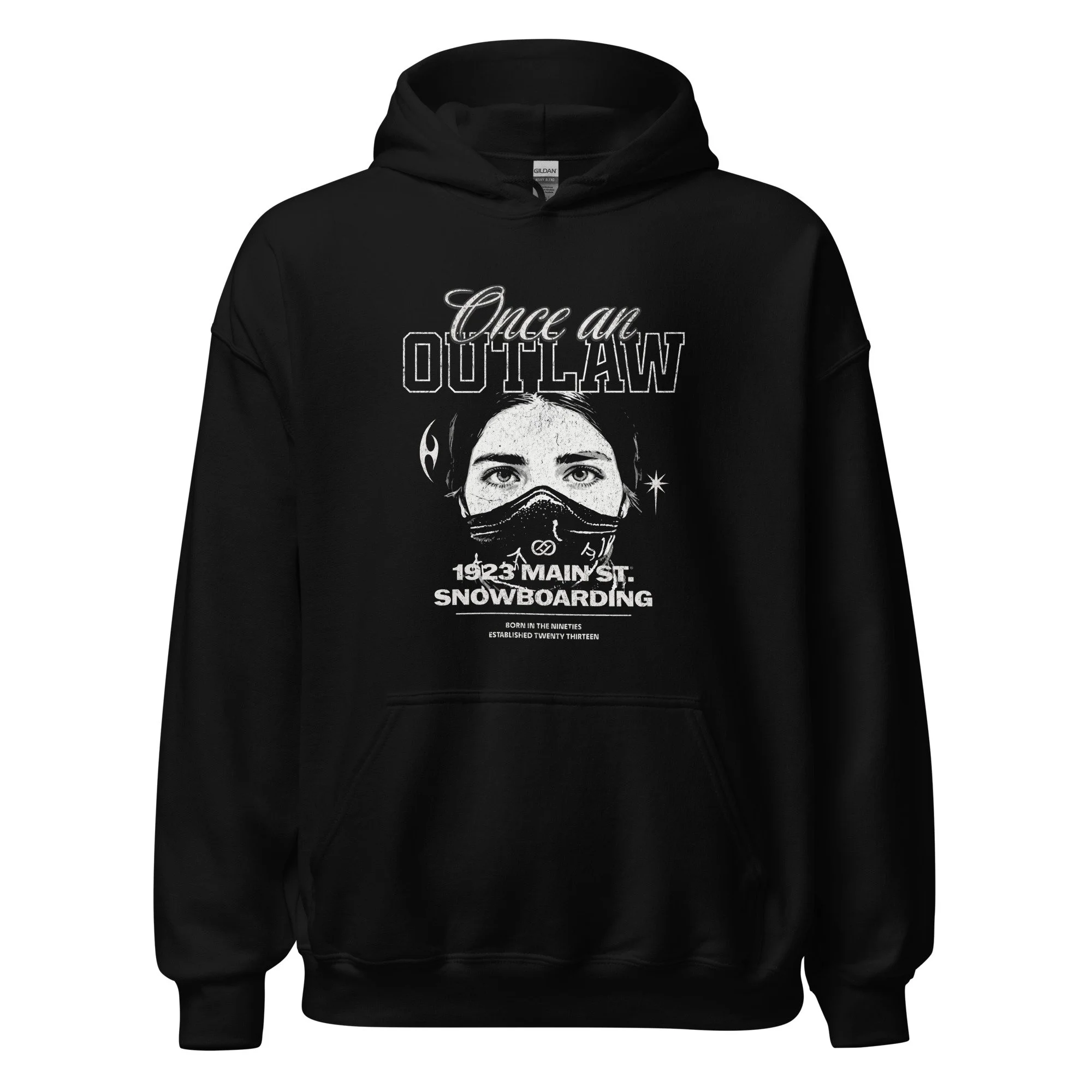
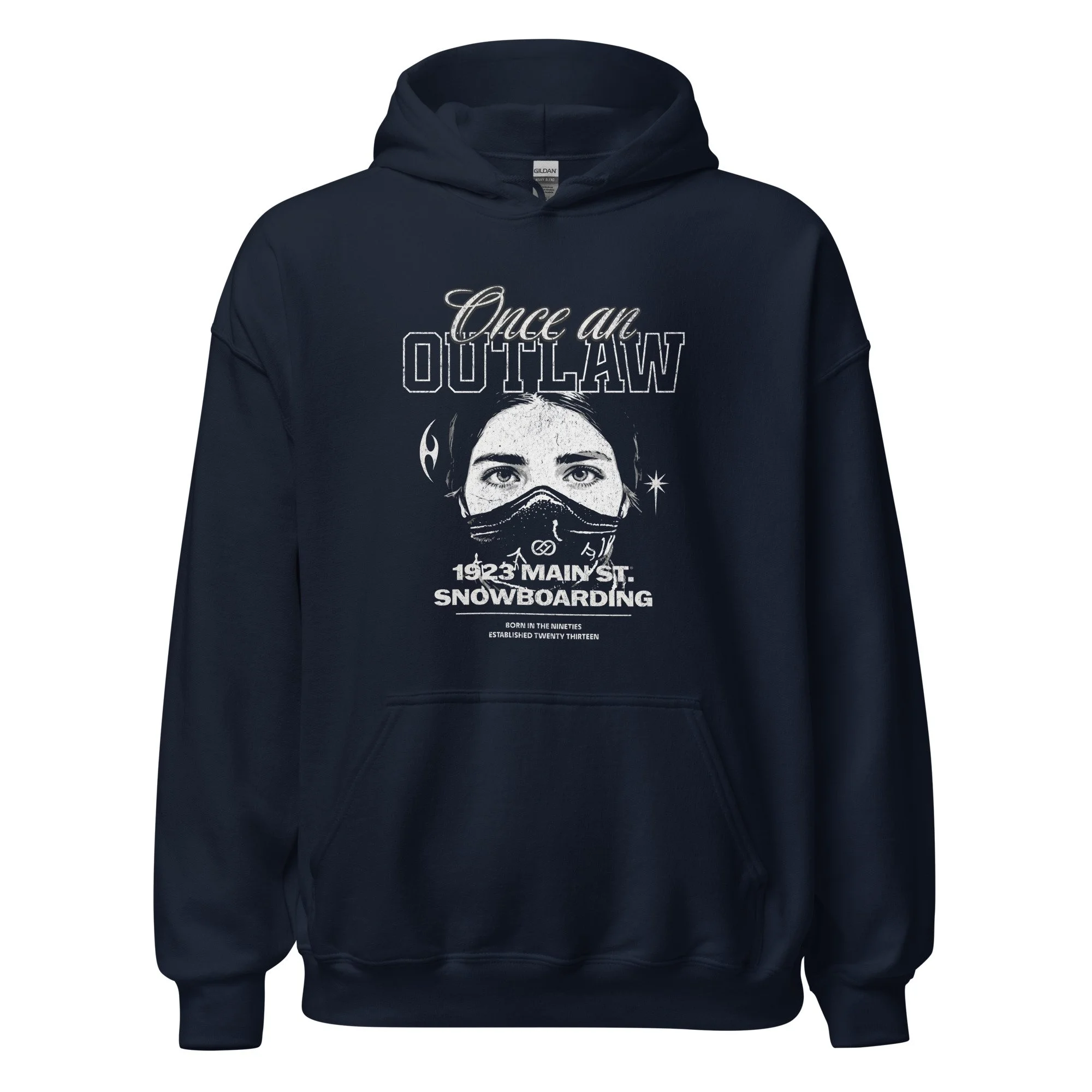
Outlaw Legacy: Built for Women Who Ride their own Line
Celebrate the roots of snowboarding with the 1923 Main Street® Once an Outlaw, Mask women’s snowboard hoodie.
Inspired by the late ’80s and early ’90s—when snowboarders pushed boundaries and weren’t exactly welcomed on the mountain—this hoodie honors the riders who chose rebellion over rules. Soft, warm, and built for everyday wear, it features bold artwork from our Once an Outlaw series, reminding everyone that the sport was shaped by defiance and drive. Slip into this hoodie and carry the spirit of the original outlaws wherever you ride.
Also available as a women’s snowboard t-shirt.
• Base Item: Gildan 18500 • 50% pre-shrunk cotton, 50% polyester • Fabric weight: 8.0 oz/yd² (271.25 g/m²) • Air-jet spun yarn with a soft feel and reduced pilling • Double-lined hood with matching drawcord • Quarter-turned body to avoid crease down the middle • 1 × 1 athletic rib-knit cuffs and waistband with spandex • Front pouch pocket • Double-needle stitched collar, shoulders, armholes, cuffs, and hem • Blank product sourced from Bangladesh, Nicaragua, Honduras or El Salvador
Disclaimer: Due to the fabric properties, the White color variant may appear off-white rather than bright white.
This product is made especially for you as soon as you place an order, which is why it may take us a bit longer to deliver it to you. Making products on demand instead of in bulk helps reduce overproduction, so thank you for making thoughtful purchasing decisions.
Please note: since all orders are custom created, all sales are final and we do not accept returns, refunds or exchanges. Please check sizing carefully using the guide.
2. Mid Layer: Your Heat Holder
Your mid layer traps body heat and keeps you insulated. This is where you can get customizable depending on conditions.
Top mid-layer options for extreme cold:
Fleece or mid-weight hoodies – great warmth-to-weight ratio
Synthetic insulated jackets – stay warm even if damp
Light puffy jackets – ideal for super-frigid mornings
Riding flannels – warm, stylish, and perfect for park riders
Rider strategy:
If the sun comes out and things warm up, your mid layer is usually the first to get stashed in a locker or pack.
3. Outer Layer: Your Shield Against the Elements
Your shell protects you from wind, snow and ice, while also acting as your outward-facing style on the mountain (we know, your fit matters).
What matters most:
Waterproofing (15K+ recommended for storm days)
Breathability so you don’t overheat
Zippers for easy ventilation
Enough room to layer without looking bulky
Style point bonus:
Pick an outer layer that complements your goggles, helmet, and mitts—color coordination goes a long way.
Extra Cold Weather Power-Ups
Neck gaiters or balaclavas
Windburn on your face is no joke. Those telltale cracked lips is not a great look. Go with fleece or lightweight technical options for softness and breathability.
Heated socks or insoles
If your feet go numb, the day is done. Heated options keep blood flowing and comfort high. Not everyone gets cold feet, but if your boots fill well and you still get cold feet, try the heated options.
Glove liners
Slide these inside your mitts for an instant temperature upgrade without sacrificing dexterity.
Hand warmers and toe warmers
A must-have for the deep freeze days. Keep extras in your jacket pocket. These can be a big help on big mountains where it’s super cold and you may be far from the nearest lodge or shelter
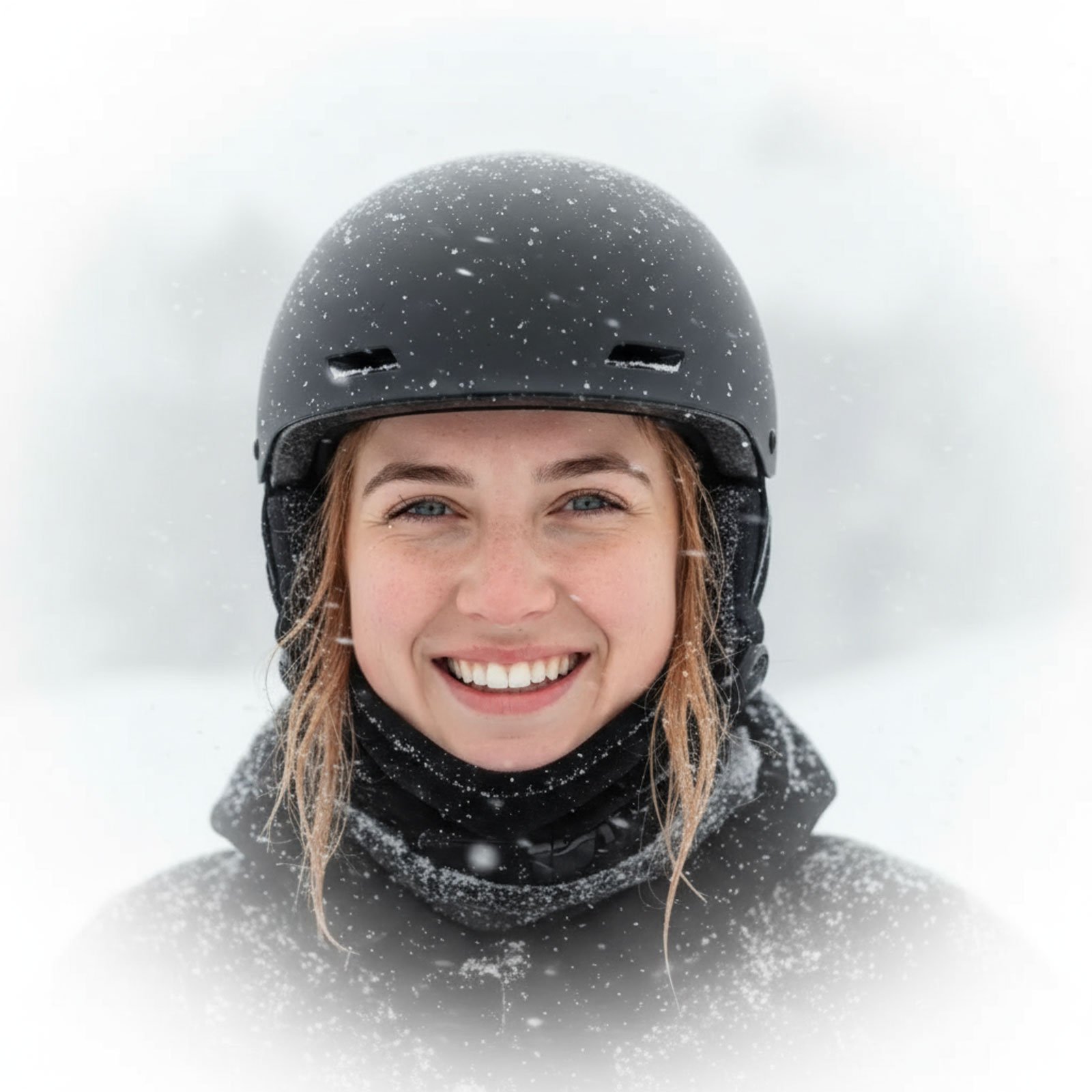
Helmet instead of a beanie
Helmets trap heat far better than beanies—and keep you safe. Win-win. Be smart and warm. Seriously, a helmet is a no brainer (or rather, a brain saver). It’s cringe seeing riders on Insta without helmets. No, you don’t look cool.
Pro-Level Layering Tips from Riders
Pay close attention especially if you’re heading out for the first time.
Dress for the lift, not the run. You cool down fast sitting on a chairlift in the wind. Layer for that moment.
Keep your core warm, and your hands and feet will follow. Add an extra mid-layer rather than doubling up on socks.
Try to avoid 100% cotton. It freezes fast and holds moisture.
Open vents before you get hot. Prevent overheating and sweating early to stay warm all day.
Pack a backup mid layer. If conditions shift, you’ll be ready.
Style Without the Bulk: How to Look Good While Layering
Stick to slimmer base layers to keep your outfit streamlined.
Choose mid layers that look good on their own—hoodies, riding flannels, insulated shirts.
Let your outer shell do the talking. A clean, well-designed jacket pulls the whole look together.
Coordinate colors. A little planning goes a long way in photos and in the lift line.
Pick functional accessories that match—your neck gaiter, gloves, and goggles should complement your overall look.
Final Run
Extreme cold doesn’t have to kill your vibe, or your day on the hill. There may even be less people out on those mornings, so there’s an added bonus to being ready for the chill. With the right layering strategy, you’ll stay warm from first chair to last run and keep your style game strong.
If you’re ready to upgrade your layering system, check out the latest snowboard hoodies and blended tees at 1923 Main Street®. We’ll help you ride warm and stylish, even on the coldest days of the season.
You might also like how to master snowboard style transition from slopes to lodge.