
Traveling with Your Board: Packing Tips for Surfers, Snowboarders and Skateboarders
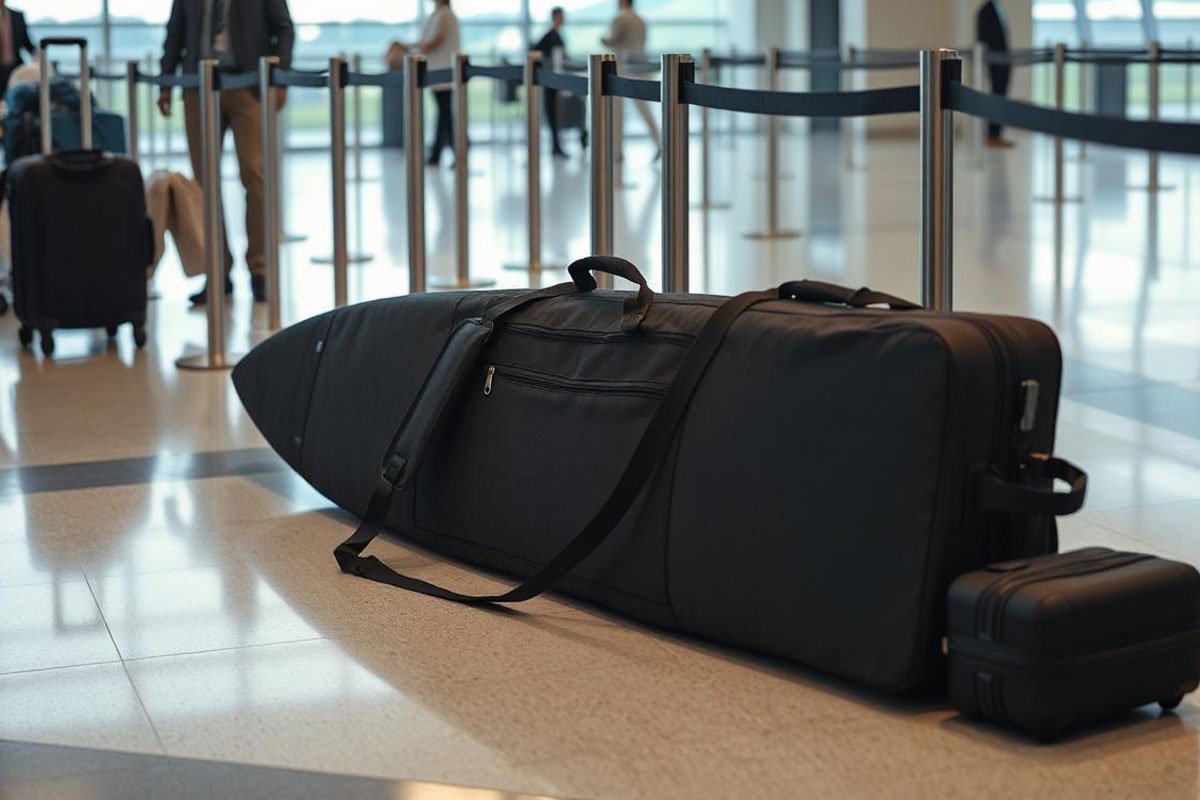
How to Protect Your Board and Avoid Airline Surprises
Traveling with a board (whether it’s a surfboard, snowboard, or skateboard) always adds a layer of strategy (and maybe a little stress) to your trip. Some airlines welcome boards as standard checked luggage, others charge premium fees, and all of them handle gear with varying degrees of “gentleness.”
If you’re planning to travel with your board for the first time, here are some practical, field‑tested tips to help you protect your deck, avoid unnecessary costs, and make the most of your luggage space.
Listen to this Story on the 1923 Main Street® Podcast
Do Airlines Charge for Boards? What to Expect
Airline policies shift constantly, but here’s the general landscape. To state the obvious, before you travel (and maybe even before you book), check the board policy for the airlines you’re considering and the type of board you’re bringing.
Surfboards: Most likely they’ll charge a fee. Some airlines treat them as standard checked bags if they meet weight/size limits, but many still charge sports‑equipment fees. I remember once thinking: I could buy a used board on the trip for this price…
Snowboards: Often included as regular checked luggage, especially if packed in a single board bag and under the weight limit.
Skateboards: Popsicle stick shortboards often qualify as carry‑on; longboards usually need to be checked.
Again, the smart move is to always to check your airline’s current sports‑equipment policy before booking. A five‑minute search can save you a surprising amount of money and airport annoyance.


Feel the beach breeze wherever you go with the 1923 Main Street® beach vibe unisex t-shirt. Featuring the laid-back motto Sun, Sand, Surf, Salt in the Air, this shirt captures the essence of coastal living and carefree days by the sea.
Crafted from a soft, lightweight fabric that feels as easy as a summer morning, this tee is made for comfort and movement. Whether you’re strolling the boardwalk, catching waves, or simply chasing the sun, it’s the perfect companion for beach lovers and surf seekers alike.
Available in a fresh palette of tropical beach colors, it pairs effortlessly with shorts, swimwear, or your favorite flip-flops. From sunrise to sunset, this shirt keeps the beach spirit alive—no matter where you are.
The perfect travel t-shirt for anyone chasing endless summer vibes.
Live the vibe. Wear the coast. Only from 1923 Main Street®.
• Base Item: Gildan 64000
• 100% ring-spun cotton
• Dark Heather is 65% polyester, 35% cotton
• 4.5 oz/yd² (153 g/m²)
• Shoulder-to-shoulder taping
• Quarter-turned to avoid crease down the center
• Blank product sourced from Bangladesh, Nicaragua, Honduras, Dominican Republic, Haiti or Guatemala
Disclaimer: Due to the fabric properties, the White color variant may appear off-white rather than bright white.
This product is made especially for you as soon as you place an order, which is why it may take us a bit longer to deliver it to you. Making products on demand instead of in bulk helps reduce overproduction, so thank you for making thoughtful purchasing decisions.
Please note: since all orders are custom created, all sales are final and we do not accept returns, refunds or exchanges. Please check sizing carefully using the guide.
Packing Tips for Surfers
Surfboards are the most fragile of the three, and airline baggage handlers aren’t known for having a gentle touch. Any surfer who travels a lot will have their share of broken board horror stories. Protecting your board starts with smart packing. (Things were a lot worse before removeable fin systems really came into their own.)
Use a Padded Travel Bag (Always)
A quality padded bag is essential. Look for reinforced nose and tail protection and at least 10–20 mm of padding.
Pack Clothing Inside the Bag for Extra Protection
This is one of the best travel hacks out there. Wrap your rails, nose, and tail with:
Hoodies
Towels
Wetsuits
T‑shirts
Your clothes act as shock absorbers while freeing up space in your main luggage. Pay close attention to the nose and tail, especially on short boards.
Remove Fins and Pack Them Separately
Fins create pressure points. Remove them, wrap them, and store them in a padded pocket.
Optional: Add Rail Protection
Foam tubing or pipe insulation taped along the rails adds an extra layer of insurance.


All Roads Lead to One Perfect Ride.
A street style shirt for skateboarders, snowboarders and surfers, our comfy lightweight 1923 Main St. All Roads Six Stars unisex streetstyle tee is perfectly suited for anywhere you plan to be.
Need a little more warmth? Check out the companion hoodie.
• Base Item: Gildan 64000
• 100% ring-spun cotton
• 4.5 oz/yd² (153 g/m²)
• Shoulder-to-shoulder taping
• Quarter-turned to avoid crease down the center
• Blank product sourced from Bangladesh, Nicaragua, Honduras, Dominican Republic, Haiti or Guatemala
Disclaimer: Due to the fabric properties, the White color variant may appear off-white rather than bright white.
This product is made especially for you as soon as you place an order, which is why it may take us a bit longer to deliver it to you. Making products on demand instead of in bulk helps reduce overproduction, so thank you for making thoughtful purchasing decisions.
Please note: since all orders are custom created, all sales are final and we do not accept returns, refunds or exchanges. Please check sizing carefully using the guide.
Packing Tips for Snowboarders
Snowboards are easier to travel with than surfboards, but they still need proper protection. Edges can get damaged and dings can occur.
Choose a Padded Snowboard Bag
Soft‑shell padded bags work for most travelers; hard cases are ideal for frequent flyers.
Bindings On or Off?
I love my step-on bindings, and they are an added bonus when traveling because they are very low profile. With strap bindings, leaving bindings on is fine, but if you’re really nervous about It, removing them:
Reduces stress on the board
Creates more packing space
Makes the bag easier to organize
Use Your Clothes as Padding
Snowboard bags are perfect for stashing:
Base layers
Jackets
Gloves
Snow pants
Anything padded and soft that you won’t be wearing on the plane can be a good friend in your board bag. This will protect your board and help you pack more efficiently (you may only need a carry-on).
Wax Before You Travel
A fresh wax coat protects the base from dryness and temperature changes while flying, plus it’s always nice to start your trip in tip top shape.



No leash. No limits. All roads ride.
The Life Unleashed Skateboards t-shirt from 1923 Main Street®: built for riders who live unrestrained—by rules, by routes (or by leashes of any kind).
Designed with streetwear loving skateboarders in mind, this graphic tee pairs clean lines with just a bit of, you know, attitude. It’s the perfect fit for sessions at the park, city cruising, or everyday wear. Durable, comfortable and unmistakably skate-inspired, it’s a statement piece for those who choose pavement over waves and movement over boundaries.
Skate free. Ride everything. Life Unleashed.
• Base Item: Gildan 64000 • 100% ring-spun cotton • 4.5 oz/yd² (153 g/m²) • Shoulder-to-shoulder taping • Quarter-turned to avoid crease down the center • Blank product sourced from Bangladesh, Nicaragua, Honduras, Dominican Republic, Haiti or Guatemala
Disclaimer: Due to the fabric properties, the White color variant may appear off-white rather than bright white.
This product is made especially for you as soon as you place an order, which is why it may take us a bit longer to deliver it to you. Making products on demand instead of in bulk helps reduce overproduction, so thank you for making thoughtful purchasing decisions.
Please note: since all orders are custom created, all sales are final and we do not accept returns, refunds or exchanges. Please check sizing carefully using the guide.
Packing Tips for Skateboarders
Skateboards are the simplest to travel with, but can still get damaged if you’re not thoughtful about it. Here are a few tweaks to make the skate travel process even smoother.
Remove Trucks and Wheels
This helps the board lie flat and fit easily inside a suitcase or backpack. Keep hardware in a small pouch so nothing goes missing. This is where a quick release truck system can be a big benefit.
Carry‑On or Checked?
Shortboards: Popsicle stick decks and other shorter boards are often allowed as carry‑on. But always be prepared, just in case, because you never know who you’re going to run into when it comes to airline staff.
Longboards: Usually too large and must be checked. So plan accordingly.
If checking your skate decks, wrap the deck in clothing or bubble wrap.
Bring a Skate Tool
Most skate tools are TSA‑friendly (as long as they don’t include a blade).
General Tips for All Board Travelers
While anything can happen when traveling with a board of any kind, if you follow the general tips in this post you will increase your odds of having an no-incident stress-free travel experience whether it’s a surf trip, snowboard trip or a skate vacation. As a hedge, one thing I always do is check to see where is the closest surf, snow or skate shop to wherever I’m staying…just in case something goes wrong and I have to fix something.
Check Airline Policies Before You Book
Policies change often. Don’t assume last year’s rules or a blog post like this are still current.
Weigh Your Bag at Home
Overweight fees can be brutal. Seriously. This can kill your wallet. A small luggage scale is worth its weight in gold.
Mark Your Bag Clearly
Board bags look similar. If you’re going to a ski hill or something, there may be a ton of them at back pick-up. So make yours easy to spot in some way.
Take a Picture of Your Gear Before Checking It
This one is very important. If damage occurs, pre-trip photos can help with claims. I like to take pictures at the packing stage, so the bag and everything else is the same as what is on the trip.
Peace of Mind when Traveling
Traveling with your board doesn’t have to be stressful. With the right bag, smart packing, and a few of these tips, you can protect your gear and travel with confidence—whether you’re chasing waves, carving fresh snow, or rolling into a new city.
Thinking of taking a surf vacation? Read our post on the 10 Best Places to Learn to Surf on Vacation.
By Mike Belobradic