
What is the best cotton t-shirt material for hot humid days?

Is one type of cotton t-shirt better than another for hot humid days?
For hot, humid days, a cotton‑poly blend t-shirt is usually a better choice than 100% cotton.
A cotton‑poly blend tee is a better choice for hot and humid weather for the following reasons:
They don’t hold sweat or water like 100% cotton, so they are lighter and dry faster.
Cotton-poly blend t-shirts wick moisture better than 100% cotton
Cotton-poly blends feel lighter and less clingy when it’s humid
Having said that, many people still prefer 100% pure cotton t-shirts because they are natural and breathable. The trade-off is that once they get wet, they tend to stay wet for a longer time and that is when 100% cotton t-shirts start trapping heat.
How to make 100% cotton t-shirts more comfortable in hot humid weather
One tip for making 100% cotton t-shirts a wearable option in hot humid weather is to choose a slightly oversize or loose fitting t-shirt. A looser-fitting cotton t-shirt will allow more air flow, which will not only make you more comfortable and less hot, but it will allow the cotton to dry faster. So if you love to wear 100% cotton t-shirts in hot humid weather, this is one tip to follow.
How Four Different Cotton T-Shirt Types Perform in Hot, Humid Weather
T-shirts have different blends and types of cotton and that makes a difference.
Below is a comparison of four popular cotton types that we use in our skateboarding, snowboarding, surfing and travel t-shirts at 1923 Main Street®, along with the relative pros and cons of each type for very hot and humid weather.
For specific shirts, you will find the information for that shirt in the bullet points of each product listing in the 1923 Main Street shop.
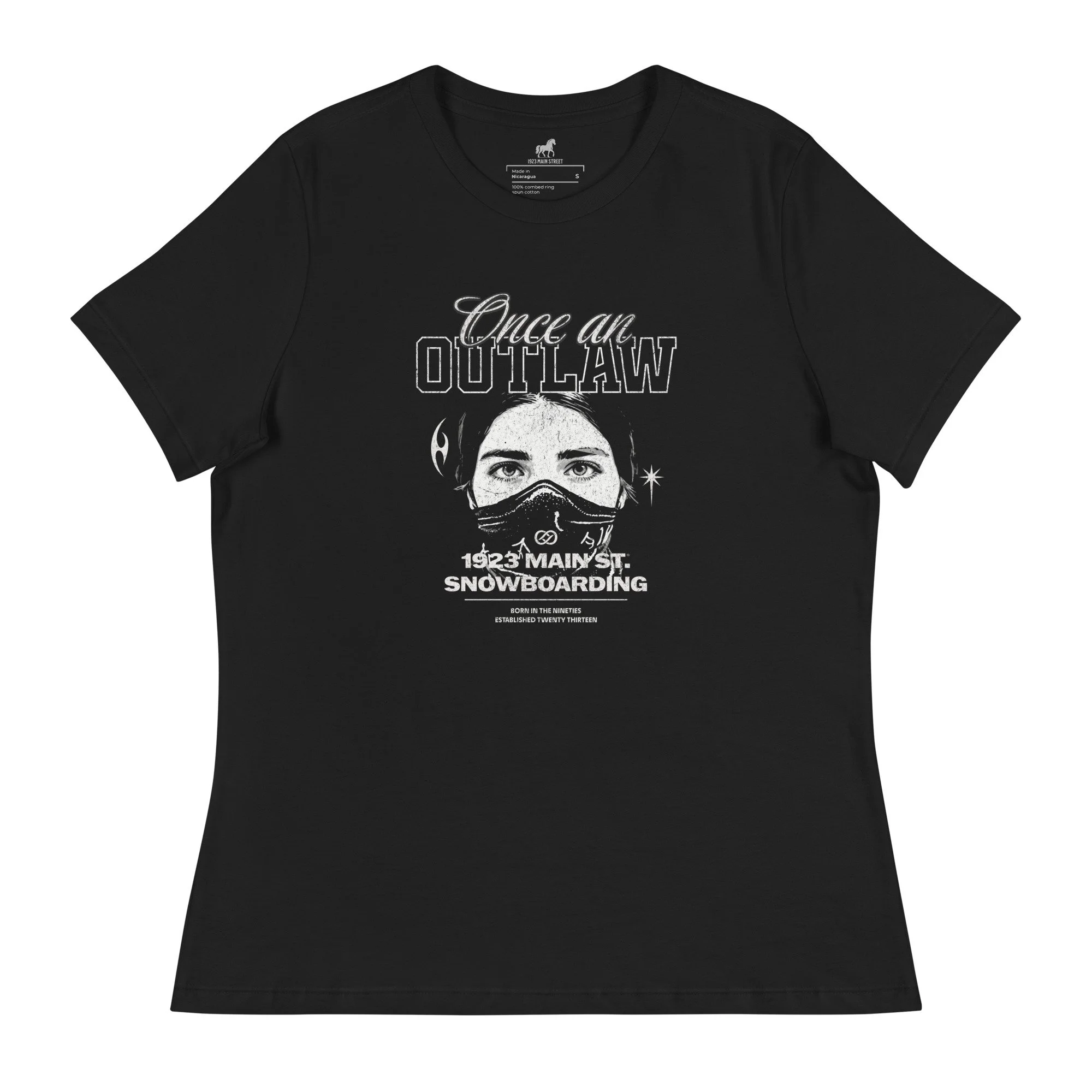
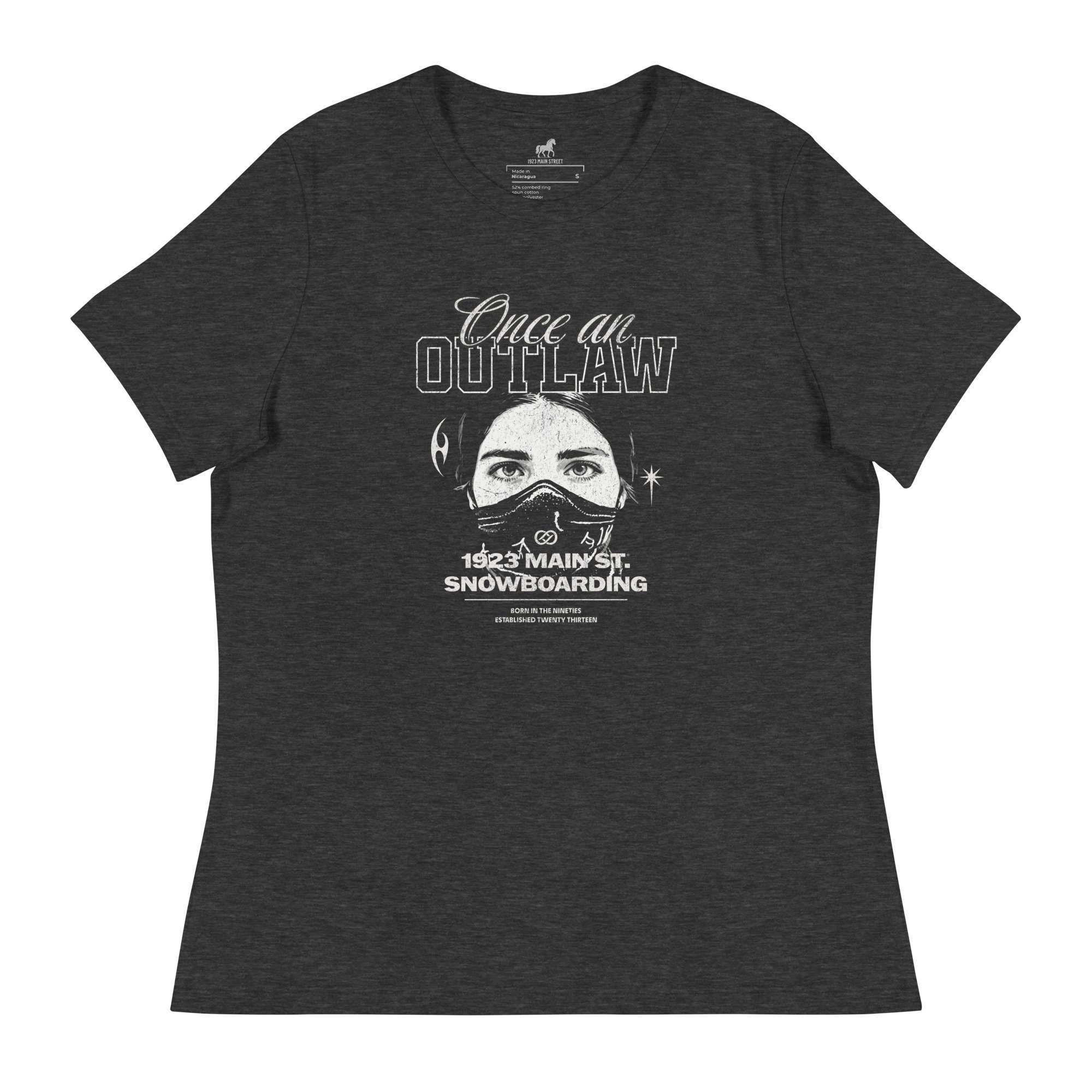
For Riders Who Keep the Outlaw Spirit Alive
Channel the renegade past of snowboarding with our women’s Once an Outlaw, Mask snowboarding tee. Back when resorts shut their doors to riders and skiers turned up their noses, snowboarders carved their own path.
This retro-inspired t-shirt, part of the Once an Outlaw collection, captures that fearless energy with a striking graphic and a comfortable, flattering fit. Lightweight and ready for any adventure, it’s a tribute to the era when snowboarding was more than a sport—it was a rebellion.
Also available as a women’s snowboard hoodie.
• Base Item: Bella + Canvas 6400
• 100% combed and ring-spun cotton
• Heather color is 52% combed and ring-spun cotton, 48% polyester
• Fabric weight: 4.2 oz/y² (142 g/m²)
• Relaxed fit
• Pre-shrunk fabric
• Side-seamed construction
• Crew neck
• Blank product sourced from Nicaragua, Honduras, or the US
This product is made especially for you as soon as you place an order, which is why it may take us a bit longer to deliver it to you. Making products on demand instead of in bulk helps reduce overproduction, so thank you for making thoughtful purchasing decisions.
Please note: since all orders are custom created, all sales are final and we do not accept returns, refunds or exchanges. Please check sizing carefully using the guide.
1. 100% Combed & Ringspun Cotton
This is what is sometimes referred to as a standard “premium soft tee” cotton.
Pros
Fibers are combed to remove short, fuzzy strands, leaving smoother, more breathable fabric
The ringspun process twists fibers into a finer, stronger yarn, meaning they’re lighter and softer than open‑end cotton
Better airflow than regular carded cotton
Feels cooler on the skin because of the smoother surface
Cons
Still absorbs and holds moisture longer than cotton/poly blends
Can feel heavy and clingy once wet
Not as fast‑drying as poly‑blend heathers
Performance in humidity
This type of cotton performs fairly well in humidity, and is a good choice among 100% cotton shirts. It is somewhat breathable and soft, but moisture retention is still its limiting factor.


Ever dream of skateboarding down Main Street, U.S.A.?
This tee brings that vision to life, combining the thrill of a good skate with the magic of theme parks.
Part of our Park Hop Athletics™ streetwear collection, the Ollie on Main St. t-shirt showcases our iconic park hopping kangaroo mascot in action—gearing up for an unforgettable skate session in the forbidden zone.
Perfect for fans of both skateboarding and park hopping, this shirt is as versatile as it is stylish. Wear it true-to-size for a classic fit or size up for that relaxed, streetwear vibe.
Park Hop Athletics™: Hop. Play. Repeat.
• This Item: Bella + Canvas 3001
• 100% combed and ring-spun cotton (Heather colors contain polyester)
• Fabric weight: 4.2 oz./yd.² (142 g/m²)
• Pre-shrunk fabric
• Side-seamed construction
• Shoulder-to-shoulder taping
• Blank product sourced from Nicaragua, Mexico, Honduras, or the US
This product is made especially for you as soon as you place an order, which is why it may take us a bit longer to deliver it to you. Making products on demand instead of in bulk helps reduce overproduction, so thank you for making thoughtful purchasing decisions.
Please note: since all orders are custom created, all sales are final and we do not accept returns, refunds or exchanges. Please check sizing carefully using the guide.
2. 100% Airlume Combed & Ringspun Cotton
Airlume is Bella+Canvas’s proprietary version of combed/ringspun cotton.
What makes it different?
According to the manufacturer, Airlume cotton uses extra-long staple fibers and removes more impurities than standard combed cotton. This description would align with the general benefits of combed cotton.
Pros
Even smoother and finer than standard combed/ringspun
Slightly lighter and more breathable
Less surface fuzz, meaning less cling when damp
Higher uniformity, meaning better airflow through the knit
Cons
It is still 100% cotton, so it absorbs and retains wetness
Not as quick‑drying as poly‑blend heathers
Performance in humidity
Slightly better than standard combed/ringspun, but still has the limits of 100% pure cotton.


The Surfing and Snowboarding Tee
Find balance where mountains meet waves. Our Calm Before the Storm tee captures the moment of stillness before the rush — a fusion of mountain peak and epic wave.
Designed for those who chase both snow and surf, this tee reminds you that All Roads lead to adventure — from powder mornings to sunset breaks.
Ride the line between serenity and chaos on a tee that’s built for comfort, movement and the moments that define the ride.
• Base Item: Gildan 5000 • 100% cotton • Ash Grey is 99% cotton, 1% polyester • Fabric weight: 5.0–5.3 oz/yd² (170-180 g/m²) • Open-end yarn • Tubular fabric • Taped neck and shoulders • Double seam at sleeves and bottom hem • Blank product sourced from Honduras, Nicaragua, Haiti, Dominican Republic, Bangladesh, Mexico
Disclaimers:
• Due to the fabric properties, the White color variant may appear off-white rather than bright white.
• Dark color speckles throughout the fabric are expected for the color Natural.
This product is made especially for you as soon as you place an order, which is why it may take us a bit longer to deliver it to you. Making products on demand instead of in bulk helps reduce overproduction, so thank you for making thoughtful purchasing decisions.
Please note: since all orders are custom created, all sales are final and we do not accept returns, refunds or exchanges. Please check sizing carefully using the guide.
3. 100% Open‑End Cotton
This is the “classic heavy tee” cotton, as it is used for standard t-shirts. It is a little rougher, less expensive and not quite as soft as others on this list, but it is one of the most common cottons used and loved by many.
Open‑end cotton is coarser, stiffer and less breathable than ringspun. It is often the cotton used in a traditional basic men’s style t-shirt.
Pros
Durable cotton and inexpensive
Has a “vintage” feel that some people like
Cons
Much bulkier yarn, so airflow is reduced
Rougher surface traps heat
Absorbs sweat more quickly and dries slowly
Feels heavy and clingy in humidity
Least soft of all cotton types
Performance in humidity
This cotton is the worst performer in hot, humid conditions. When it is really hot and humid (like Florida in August hot and humid), this is not a great choice. You will notice the difference in that it feels heavier, clingier and doesn’t dry as quickly.
However, it is an excellent choice for spring, fall and winter wear (and even potentially a workable option in hot humid weather, if you’re not out for long or it’s early morning or late at night).
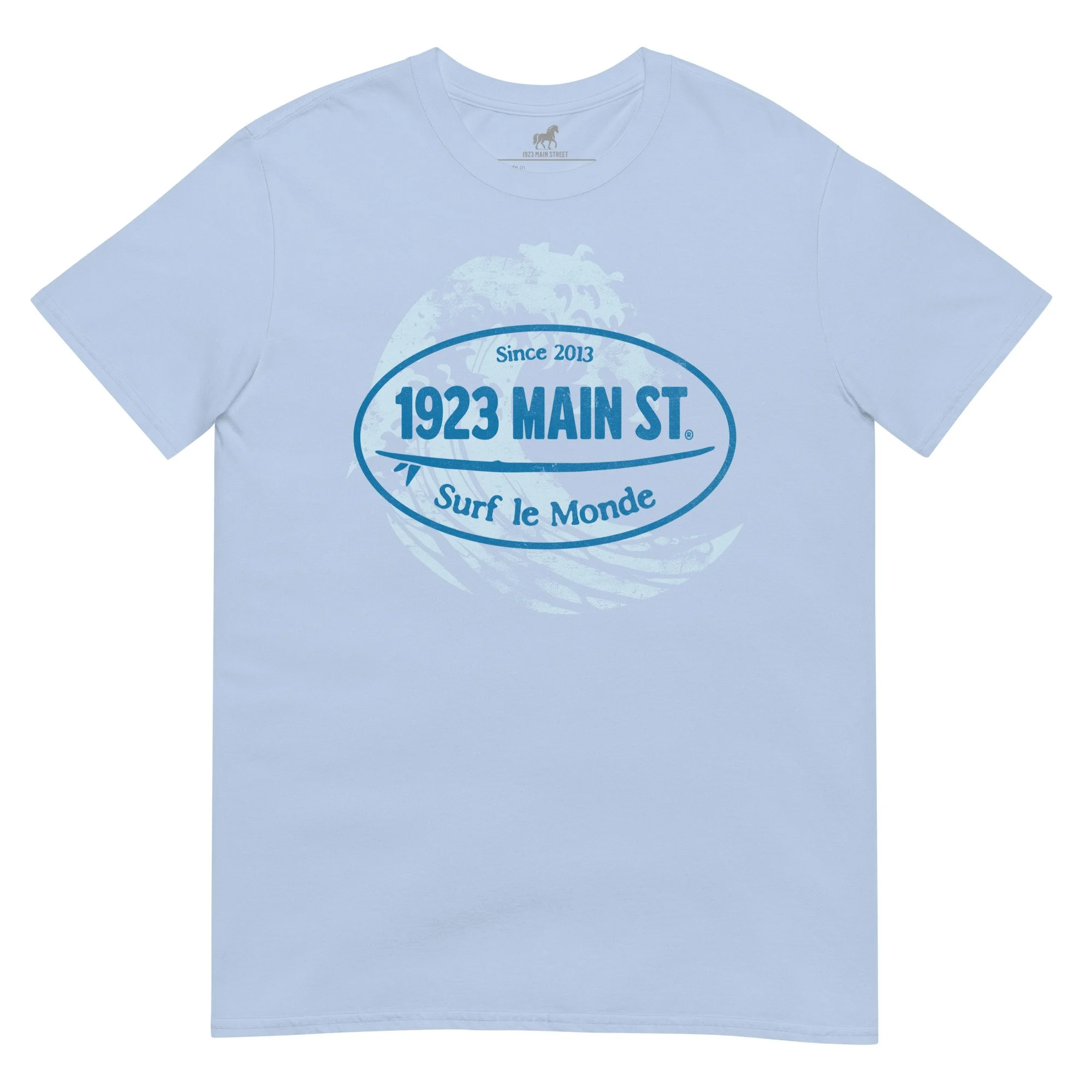
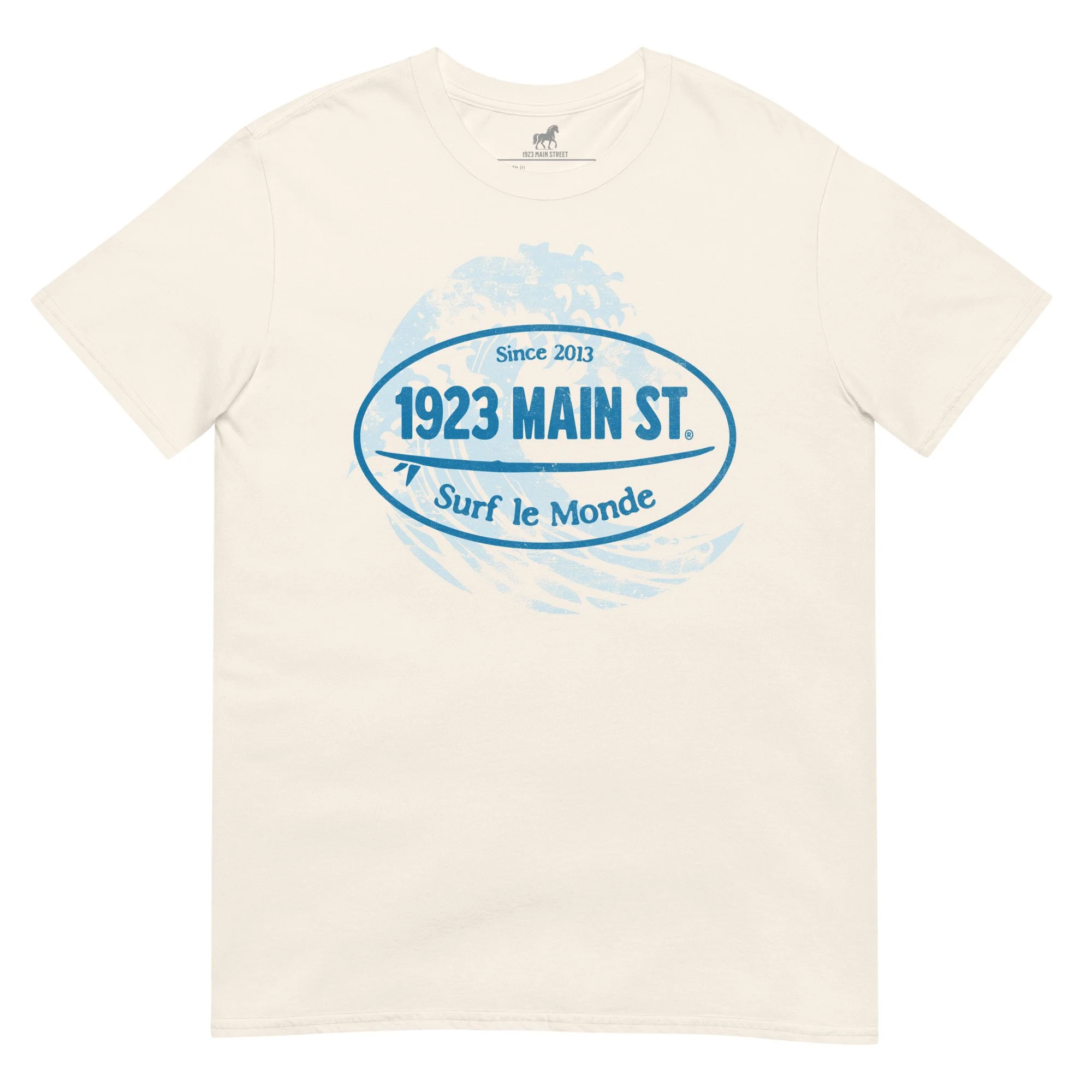
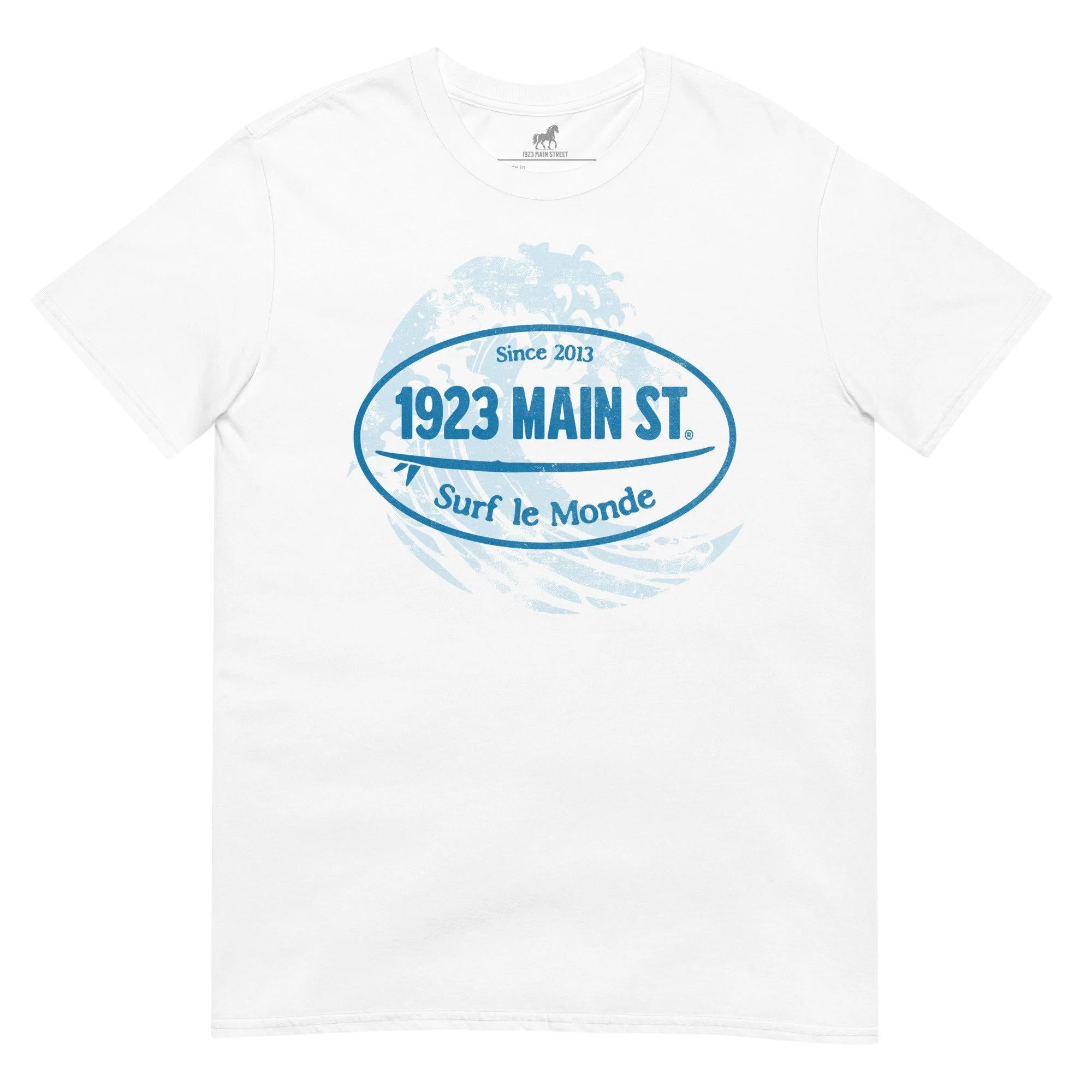
Great waves are everywhere.
The Surf le Monde Oval Stamp t-shirt from 1923 Main Street® Surfing is inspired by surfers who chase swells across the globe (or those who hope to someday), always searching for new waves on unfamiliar shores. From tropical reef breaks to cold-water point breaks, this tee speaks to a life shaped by surf travel and exploration.
Made from soft, comfortable cotton, this premium surfing t-shirt is designed for all-day wear, whether you are checking the forecast, loading boards or unwinding after a long session. Clean surf graphics and a timeless oval stamp design make it a go-to piece for surfers who see the entire world as their playground.
Also available as a surfing hoodie.
• Base Item: Gildan 64000 • 100% ring-spun cotton • 4.5 oz/yd² (153 g/m²) • Shoulder-to-shoulder taping • Quarter-turned to avoid crease down the center • Blank product sourced from Bangladesh, Nicaragua, Honduras, Dominican Republic, Haiti or Guatemala
Disclaimer: Due to the fabric properties, the White color variant may appear off-white rather than bright white.
This product is made especially for you as soon as you place an order, which is why it may take us a bit longer to deliver it to you. Making products on demand instead of in bulk helps reduce overproduction, so thank you for making thoughtful purchasing decisions.
Please note: since all orders are custom created, all sales are final and we do not accept returns, refunds or exchanges. Please check sizing carefully using the guide.
4. 100% Ringspun Cotton
This cotton is similar to #1, but without the combing step.
Pros
Finer, smoother, and stronger than open‑end cotton
Better breathability and softness
Lighter feel than open-end cotton
Cons
Not as smooth or breathable as combed + ringspun
Still absorbs and holds moisture
Can get clingy once damp
Performance in humidity:
Better than open‑end, not as good as combed/ringspun.
Summary: Cotton Fabric Performance in Hot and Humid Conditions
Airlume Combed & Ringspun Cotton
Breathability: High
Moisture Retention: High
Drying Speed: Slow
Feel When Damp: Medium
Overall Hot / Humid Rating: Good
Combed & Ringspun
Breathability: High
Moisture Retention: High
Drying Speed: Slow
Feel When Damp: Medium Heavy
Overall Hot / Humid Rating: Good
Ringspun
Breathability: Medium
Moisture Retention: High
Drying Speed: Slow
Feel When Damp: Heavy
Overall Hot / Humid Rating: Fair
Open End
Breathability: Low
Moisture Retention: Very High
Drying Speed: Very Slow
Feel When Damp: Very Heavy
Overall Hot / Humid Rating: Poor

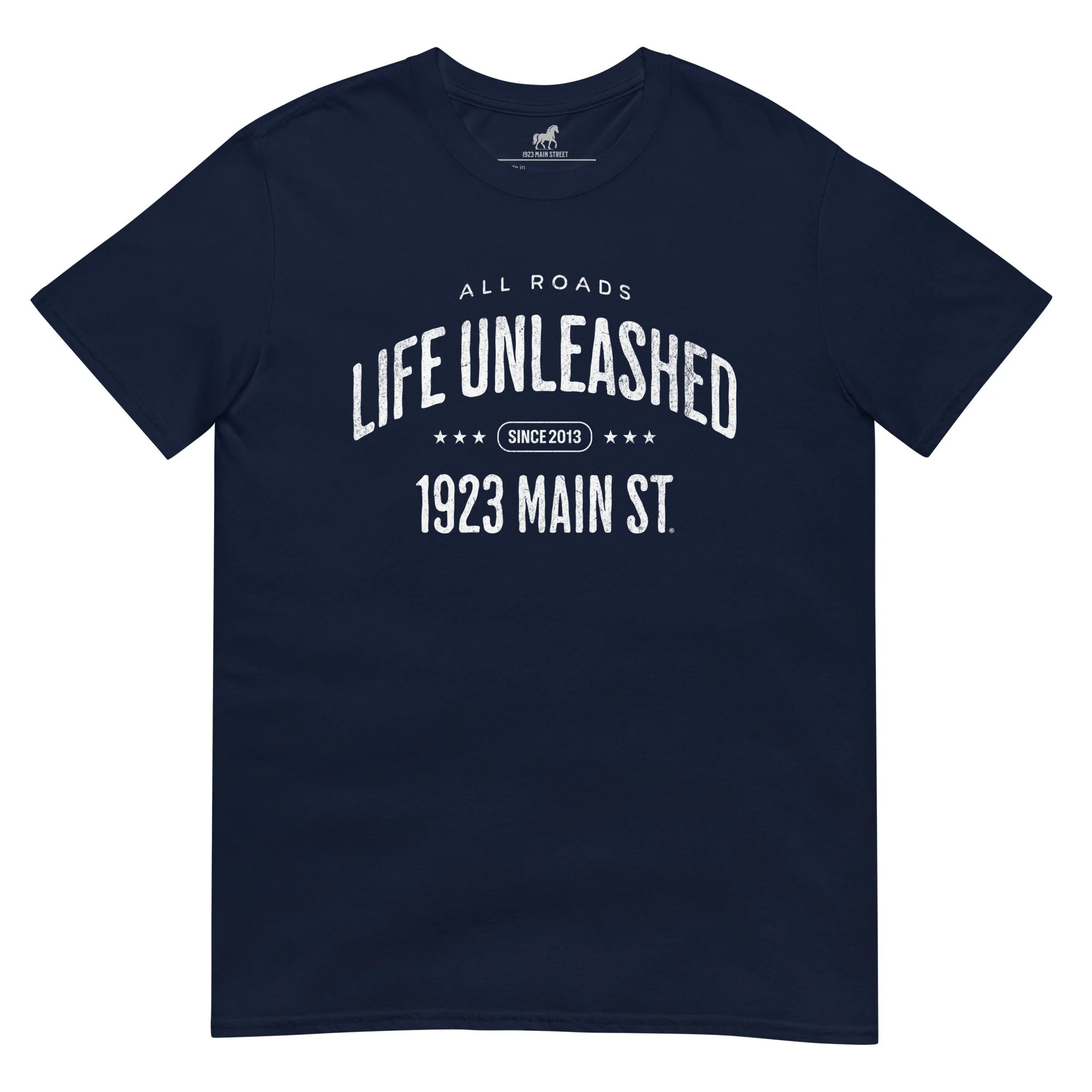
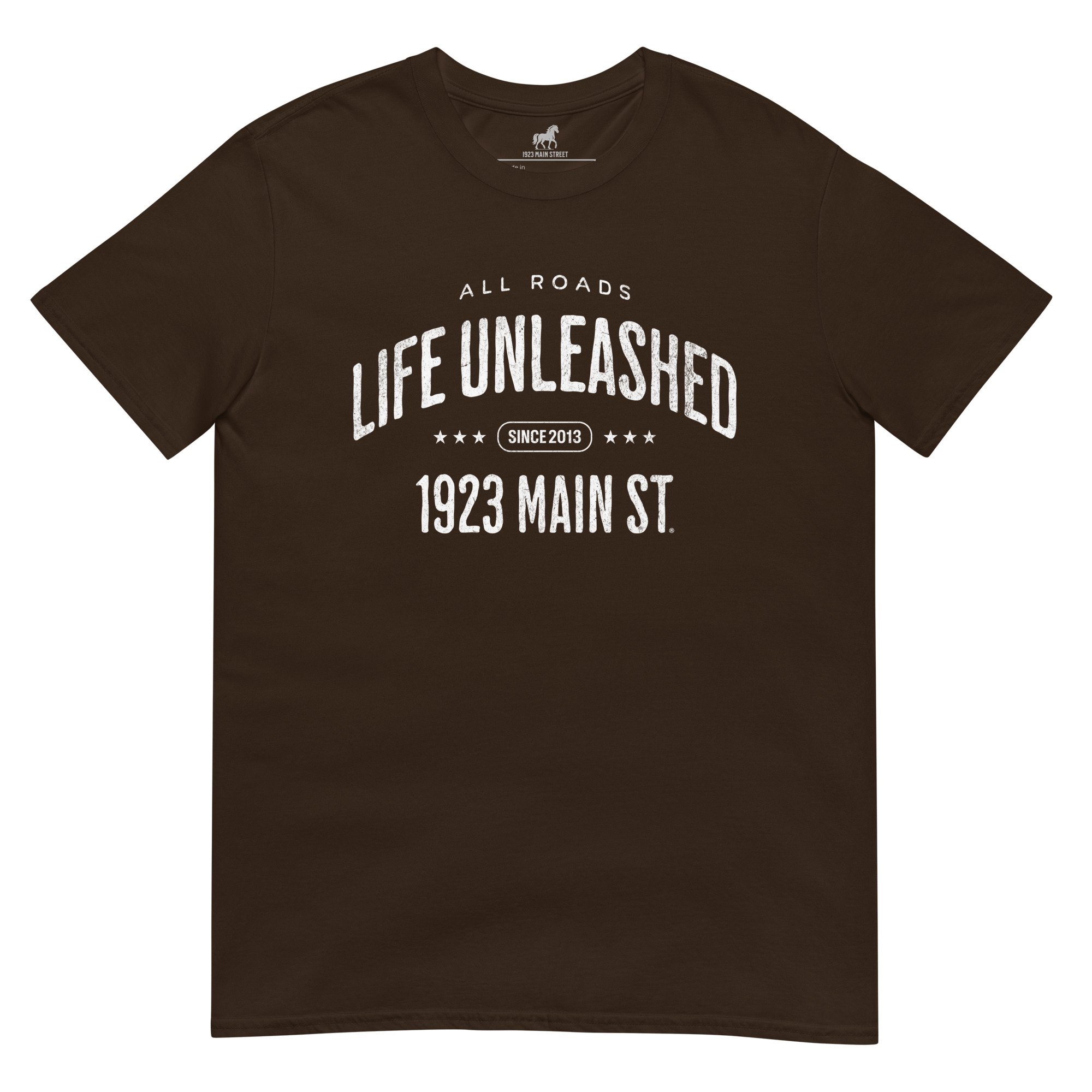
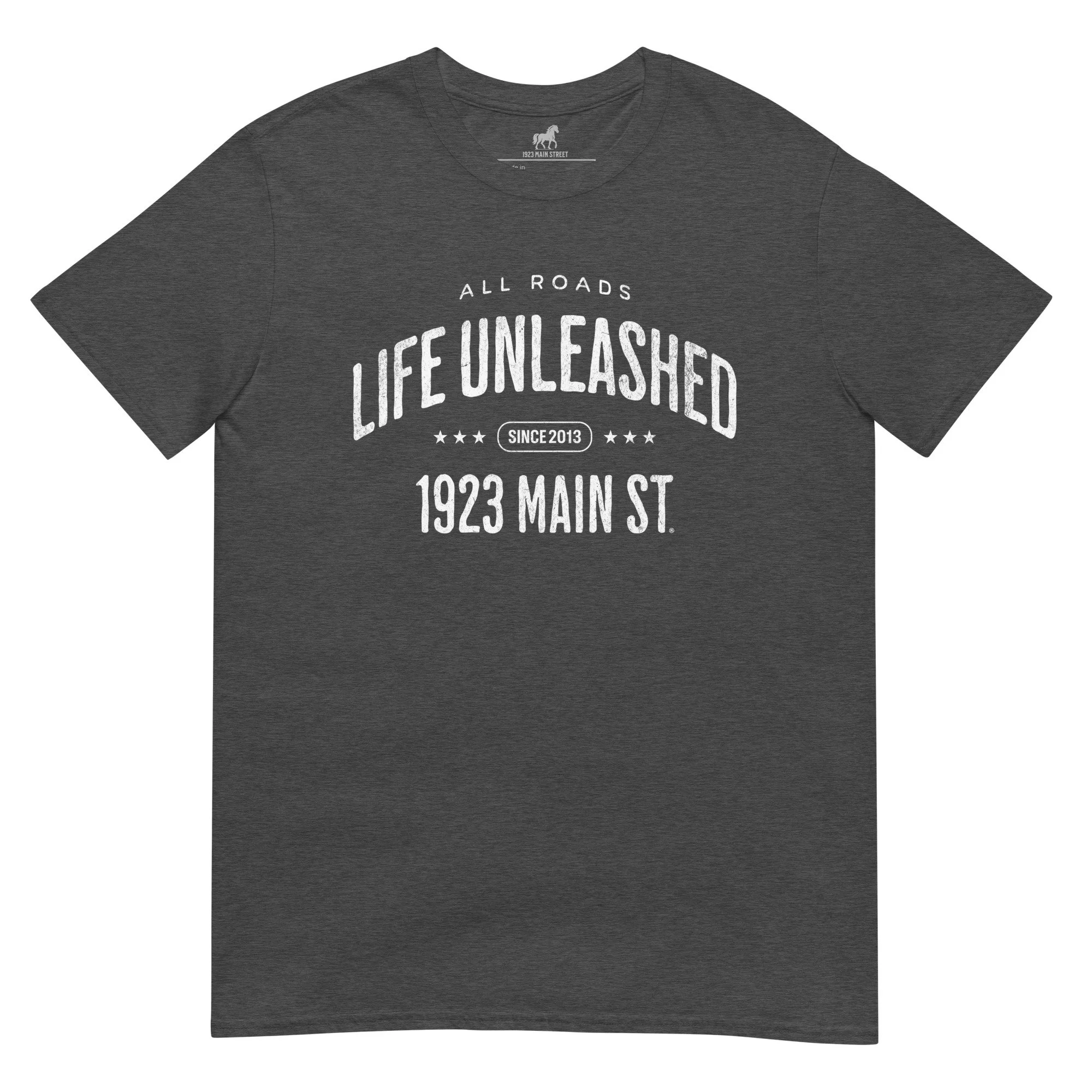
Built to Ride, Day or Night
Made for skateboarders who ride whenever the streets are ready, the Life Unleashed Arch skateboarding t-shirt by 1923 Main Street® delivers lightweight comfort and easy movement on and off the board. This dark-color version skate tee is ideal for street skating, park sessions, and everyday wear, with a clean look that holds up session after session.
All Roads, Unleashed.
Also available on light-color tees and hoodies.
• Base Item: Gildan 64000
• 100% ring-spun cotton ( Dark Heather is 65% polyester, 35% cotton)
• 4.5 oz/yd² (153 g/m²)
• Shoulder-to-shoulder taping
• Quarter-turned to avoid crease down the center
• Blank product sourced from Bangladesh, Nicaragua, Honduras, Dominican Republic, Haiti or Guatemala
Disclaimer: Due to the fabric properties, the White color variant may appear off-white rather than bright white.
This product is made especially for you as soon as you place an order, which is why it may take us a bit longer to deliver it to you. Making products on demand instead of in bulk helps reduce overproduction, so thank you for making thoughtful purchasing decisions.
Please note: since all orders are custom created, all sales are final and we do not accept returns, refunds or exchanges. Please check sizing carefully using the guide.
Are Heather T-Shirts (Cotton‑Poly Blends) Better in Hot, Humid Weather?
Yes, heather shirts are better in hot, humid weather, both in theory and in practice.
Heather t-shirts not only add a bit of structure, style and an aged look to your t-shirt graphics, they are also a good choice on hot humid days. This is because heather tees are cotton/poly blends. And while the blends and percentages can vary from manufacturer to manufacturer (and from color-to-color within the same line of shirts), they are almost always a better option for any sort of physical activity in hot humid places.
Why Heather T-Shirts are Better than 100% Cotton Tees in Hot Humid Weather
Heather t-shirts contain polyester, and polyester is:
Less absorbent than cotton
More moisture‑wicking
Faster‑drying
Lighter when damp
This directly addresses cotton’s biggest weakness when it comes to humidity: cotton holds onto wetness and gets heavy.
Even a small amount of poly (10%–40%) improves:
Drying time
Cling resistance
Overall comfort in humidity
Shopping Tip: For every heather t-shirt that we sell at 1923 Main Street, we note the percentage blends for heather shirts on the product page.
Final Thoughts on the Best Cotton for Hot Humid Weather
A heather cotton‑poly blend will almost always outperform 100% cotton in hot, humid weather — even premium cotton.
But that doesn’t mean that any of the other types of cotton are bad choices.
It’s all about knowing and understanding the differences in each type of cotton so that you can decide what to wear and what to pack. For example, even if it’s an excruciatingly hot and humid day, if you’re only planning to be outside for an hour or two, then you could be fine even with an open-end cotton tee.
As always, knowledge is power, so hopefully you found this quick overview helpful in understanding the different types of cotton t-shirt construction and blends, and how they make a difference in wearability.
By Mike Belobradic