
What Should You Wear for Your First Time Snowboarding?
A 1923 Main Street® Guide to Start Your Snowboarding Adventure the Right Way
Here’s the quick answer: For your first time snowboarding, wear waterproof snow pants, a waterproof and breathable jacket, insulated gloves or mitts, moisture‑wicking base layers, proper snowboard socks, and a certified snow‑sport helmet.
Add butt/tailbone padding and wrist guards for protection, and adjust your layers based on the weather, because beginners often get hot from the physical effort. Also, a lesson from a qualified instructor is highly recommended for safety and faster progress.
That is the quick answer. Now, let’s break it down into more details so you know exactly what to choose and why it matters.
Listen to this Story on the 1923 Main Street® Podcast
Waterproof Outerwear: Your First Line of Defense
On your first day snowboarding, you’ll be spending a lot of time in the snow: falling, sitting, strapping in, laying down and, hopefully, riding and learning. Waterproof gear keeps you dry and comfortable all day. You’ll have enough discomfort just from the inevitable pains of learning, so do what you can to minimize things that are in your full control—like wearing the right gear.
Snow Pants
Look for pants designed specifically for snowboarding. You don’t have to run out and buy the top-tier brand gear (please don’t), but you should have quality snow pants as a starting point.
Look for the following:
Waterproof rating of 10,000 mm or higher
Taped seams to block moisture
Reinforced cuffs for durability
Room to move for bending, twisting, and inevitable falls
And possibly room for a little extra padding (more on that later)
Snowboard Jacket
A good jacket keeps snow out while letting heat escape.
Features to look for in a snowboard jacket include:
Waterproof and breathable shell or insulated jacket
Underarm zips for ventilation
A style with a slightly longer cut to prevent snow from getting in
Powder skirt for deep‑snow days (Though it’s worth noting that deep powder is not a good thing for your first day.)
Stay Cold. Ride Longer.
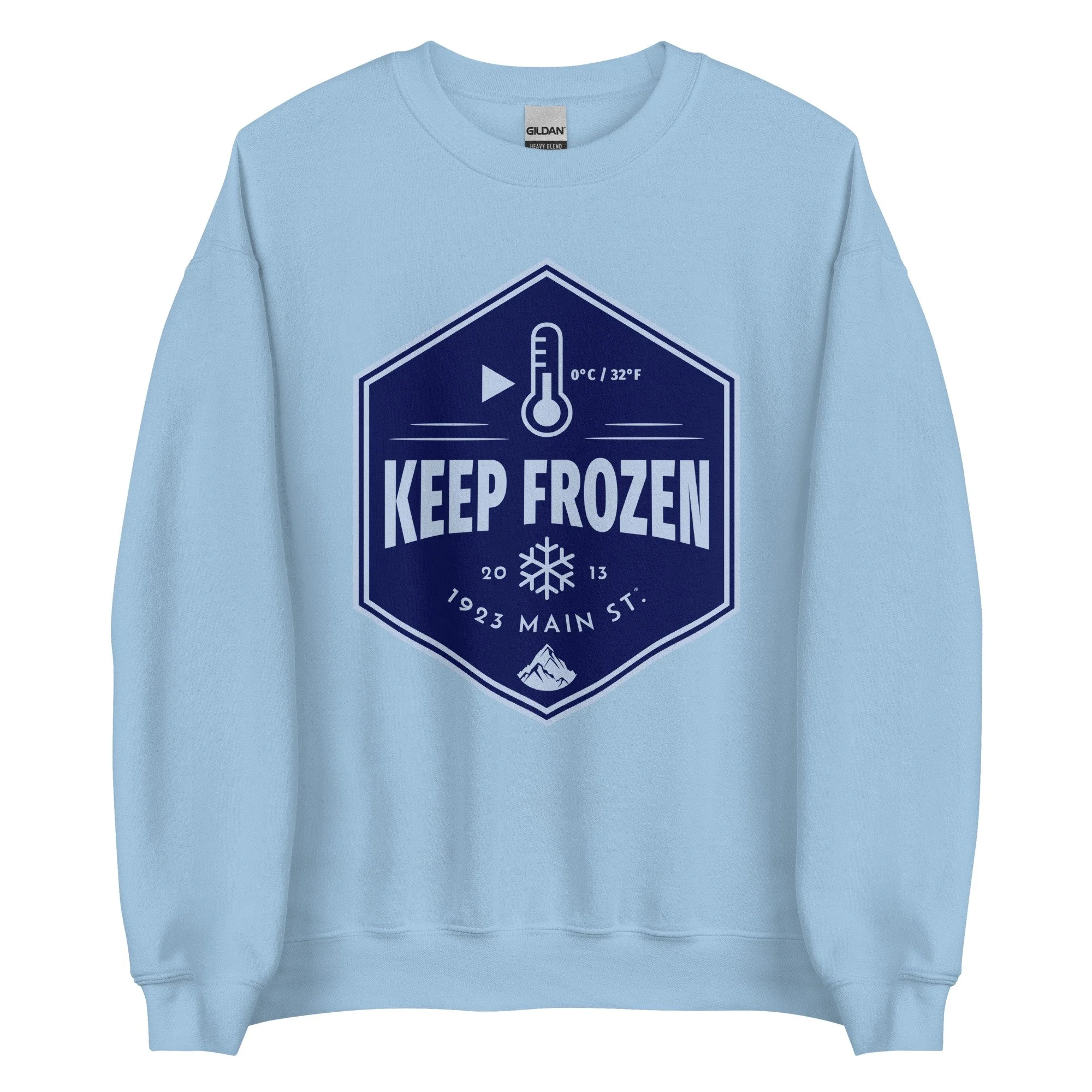
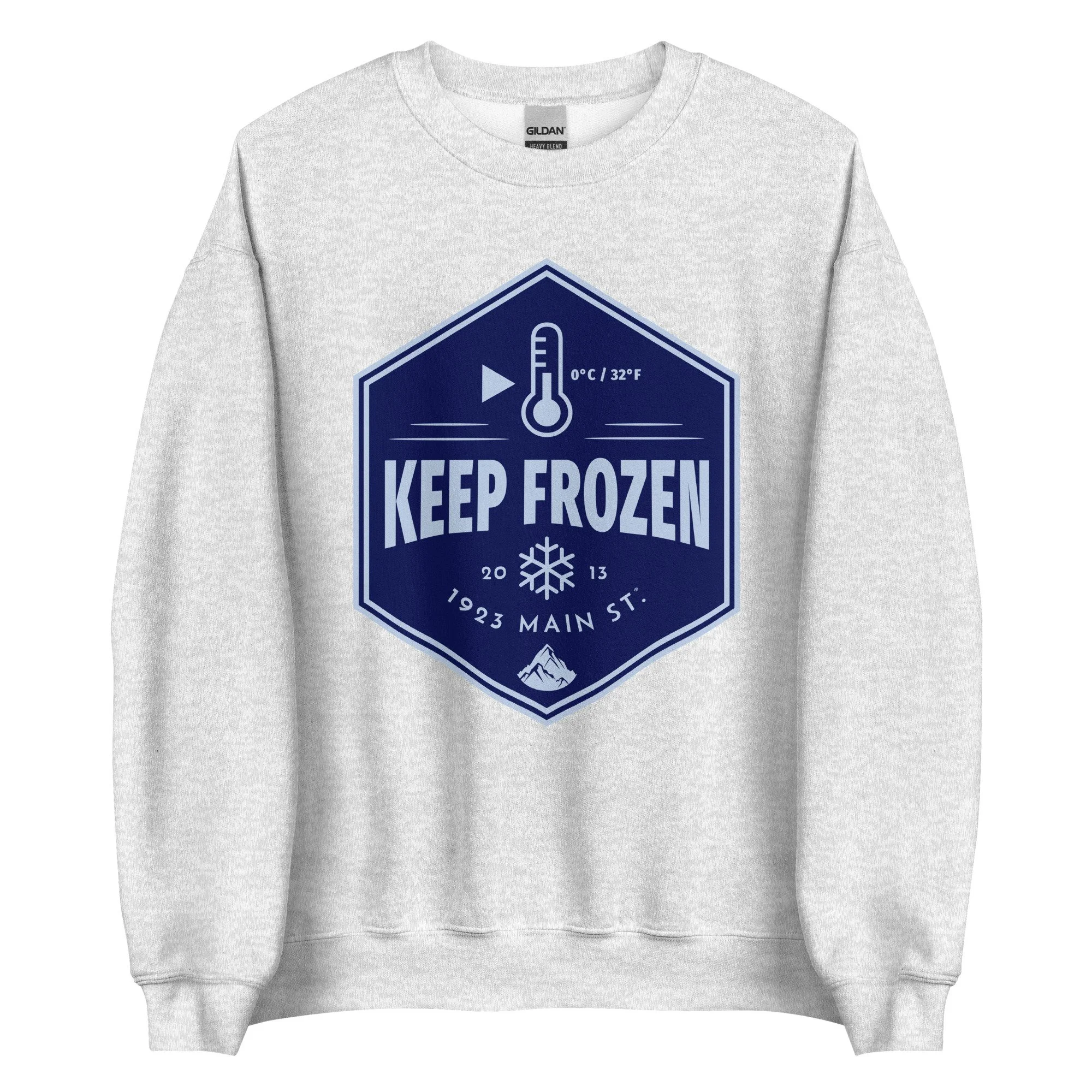
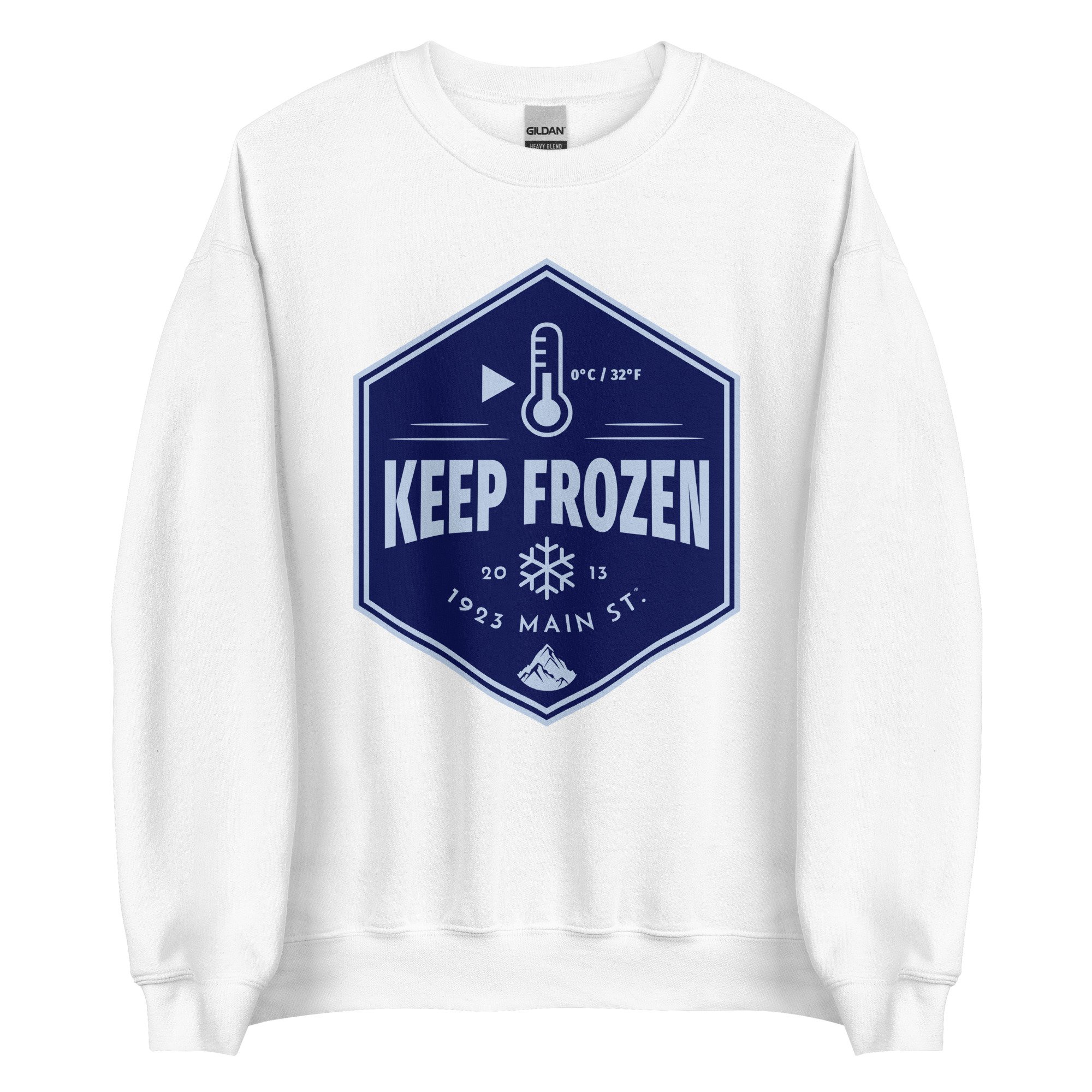
The Keep Frozen Label sweatshirt by 1923 Main Street® is built for snowboarders who embrace cold days and endless snow. Featuring a cold-storage-inspired Keep Frozen graphic, this sweatshirt is designed for riders who want warmth without losing their winter identity.
Perfect for first-chair rides, mountain towns, and end-of-day downtime, this sweatshirt delivers cozy comfort while reinforcing a frozen-first mindset. It’s a go-to mid-layer for snowboarders who chase winter wherever it exists.
Because forever frozen is where you live.
Also available as a t-shirt.
• Base Item: Gildan 18500 • 50% cotton, 50% polyester • Pre-shrunk • Classic fit • 1x1 athletic rib knit collar with spandex • Air-jet spun yarn with a soft feel • Double-needle stitched collar, shoulders, armholes, cuffs, and hem
Disclaimers: • Due to the fabric properties, the White color variant may appear off-white rather than bright white. • Subtle orange hue shifts with lighting in the Orange color variant.
This product is made especially for you as soon as you place an order, which is why it may take us a bit longer to deliver it to you. Making products on demand instead of in bulk helps reduce overproduction, so thank you for making thoughtful purchasing decisions.
Please note: since all orders are custom created, all sales are final and we do not accept returns, refunds or exchanges. Please check sizing carefully using the guide.
What Does a Waterproof Rating Mean?
Many beginners don’t know this term, so here’s the simple version:
A waterproof rating (e.g., 10,000 mm) measures how much water a fabric can resist before leaking.
Higher numbers equal better protection in wet or slushy conditions.
For first‑timers, 10,000 mm+ is the sweet spot.
Gloves or Mitts: Keep Your Hands Warm and Dry
Your hands will be in the snow constantly—adjusting bindings, pushing yourself up, catching falls, wiping away tears (just kidding).
When it comes to quality mitts or gloves, look for:
Waterproof gloves or mitts
Mitts for warmth, gloves for dexterity
Wrist straps to keep them secure
Avoid cotton or knit gloves
A Helmet Is Non‑Negotiable
We still cringe when we see riders of any level with no head protection. It only takes one fall, and it may even be someone else who causes it, not you. A proper snowboarding helmet protects your head for any eventuality, keeps you warm, and often includes adjustable vents for temperature control. Do not use your bike helmet. Snowboard helmets are built for cold, moisture, and impact.
Goggles
Snowboard goggles are optional on your first day. It really depends on the weather (if it’s snowing it may bother your eyes without goggles) and your comfort with goggles (you want to feel your best and be able to see your best). If you have goggles or can borrow some, definitely throw them in your bag. But you may not need to run out and buy goggles for day one. Use your own discretion here.


A Snowboarding Hoodie for Those Who Embrace the Chill
The 1923/MS Numb snowboard hoodie takes that frozen-fingers, frozen-face energy and wraps it in warmth. Perfect for layering up before first chair or posting up slopeside when the day’s done.
Because being numb never felt so good (and every snowboarder knows it).
Also available as a lightweight unisex tee for all-season wear.
• Base Item: Gildan 18500 • 50% pre-shrunk cotton, 50% polyester • Fabric weight: 8.0 oz/yd² (271.25 g/m²) • Air-jet spun yarn with a soft feel and reduced pilling • Double-lined hood with matching drawcord • Quarter-turned body to avoid crease down the middle • 1 × 1 athletic rib-knit cuffs and waistband with spandex • Front pouch pocket • Double-needle stitched collar, shoulders, armholes, cuffs, and hem • Blank product sourced from Bangladesh, Nicaragua, Honduras or El Salvador
Disclaimer: Due to the fabric properties, the White color variant may appear off-white rather than bright white.
This product is made especially for you as soon as you place an order, which is why it may take us a bit longer to deliver it to you. Making products on demand instead of in bulk helps reduce overproduction, so thank you for making thoughtful purchasing decisions.
Please note: since all orders are custom created, all sales are final and we do not accept returns, refunds or exchanges. Please check sizing carefully using the guide.
Snowboard Crash Padding: The Beginner’s Secret Advantage
If you’re new to snowboarding, you need to know one thing. You will fall on your fist day. A lot. And hard. Before you even take your first run, practice how to fall (yes, seriously). Save yourself a fractured wrist or tailbone. A qualified instructor will do this as part of your first lesson.
In addition to knowing how to fall, a little extra protection can also save you from injury.
Tailbone/Butt Padding
Impact shorts or tailbone pads are available from snowboard companies. These will prevent bruising and soreness, which can otherwise last for days (or longer – we have seen it all). Snowboard crash pads are specifically designed to be low‑profile and fit easily under snow pants.
Wrist Guards
This is a highly-recommended addition. Beginners instinctively put their hands out when falling, which can lead to broken wrists. Wrist guards help prevent sprains and fractures—two of the most common first‑day injuries for snowboarders. So grab those skate wrist guards and do yourself a favor. You’ll need to be sure when will fit inside your gloves or mitts.
Dress for the Weather (and for How Hard You’ll Work)
Snowboarding is surprisingly physical, especially on your first days. Even on cold days, beginners often get hot and sweaty from repeatedly standing up, falling down and practicing turns.
Build a Layering System
Base layer: Moisture‑wicking is best versus 100% cotton.
Mid‑layer: Fleece or light insulated jacket.
Outer layer: Waterproof shell or insulated jacket depending on temperature.
If it’s a really cold day, see our post on layering for extreme cold weather.
Adjust Throughout the Day
Too warm? Open vents or remove a mid‑layer.
Too cold? Add a neck warmer or liner gloves.
Weather changes fast, so plan ahead and stay flexible.
Don’t Forget the Small Essentials
In addition to the main items noted above, these items can also make a big difference on your first day snowboarding:
Snowboard socks: Tall, warm, moisture‑wicking (and bring an extra pair, just in case you need them).
Goggles: As mentioned above, these are optional but can help with visibility in sun, snow, or wind. But if you’re not comfortable with goggles, that’s okay too. You don’t want anything that may throw you off your game on your first time out.
Neck warmer or buff: Easy to remove if you heat up.
Beanie or Toque: You won’t need one if you have a proper snowboard helmet, but you may want one during breaks.


The 1923/MS Triple Black Snowboarding T-Shirt brings the same attitude and comfort as our iconic snowboard hoodie version, but in a lightweight, all-season tee. Designed for riders who love the mountain lifestyle, this premium cotton snowboarding t-shirt blends streetwear style with all-day comfort.
With its varsity-inspired design from our streetstyle series, this unisex snowboarding t-shirt keeps you looking sharp in classic minimalism. Whether you’re layering up or chilling post-ride, the Triple Black tee is built for good times on and off the snow.
• Base Item: Gildan 64000
• 100% ring-spun cotton
• 4.5 oz/yd² (153 g/m²)
• Shoulder-to-shoulder taping
• Quarter-turned to avoid crease down the center
• Blank product sourced from Bangladesh, Nicaragua, Honduras, Dominican Republic, Haiti or Guatemala
Disclaimer: Due to the fabric properties, the White color variant may appear off-white rather than bright white.
This product is made especially for you as soon as you place an order, which is why it may take us a bit longer to deliver it to you. Making products on demand instead of in bulk helps reduce overproduction, so thank you for making thoughtful purchasing decisions.
Please note: since all orders are custom created, all sales are final and we do not accept returns, refunds or exchanges. Please check sizing carefully using the guide.
And Please—Take a Snowboard Lesson
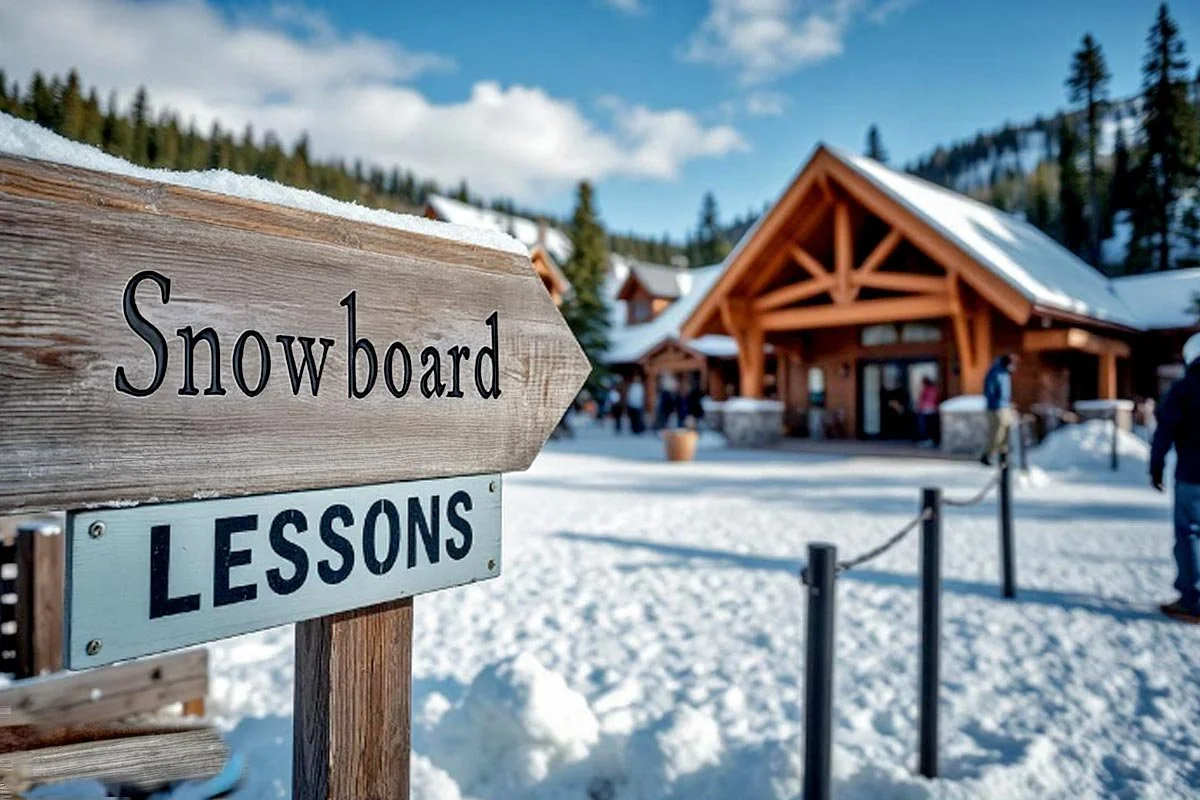
A snowboard lesson is the fastest and safest way to enjoy snowboarding. You’ll learn proper technique, avoid bad habits, and spend less time falling. It’s the best investment you can make in your first day on the mountain.
Even if you only take a half-day intro lesson, you will be so much further ahead than if you try to go it alone or have a friend teach you (unless your friend is skilled at snowboarding and very patient).
Make Your First Time Snowboarding a Great Memory
Snowboarding is an awesome sport. Your first time snowboarding should be unforgettable—in the best way.
With waterproof outerwear, proper padding, smart layering, and the right protective gear, you’ll stay warm, dry, and ready to ride. Combine that with a lesson, and you’re set up for an incredible day on the mountain.
Enjoy the ride.
By Mike Belobradic